
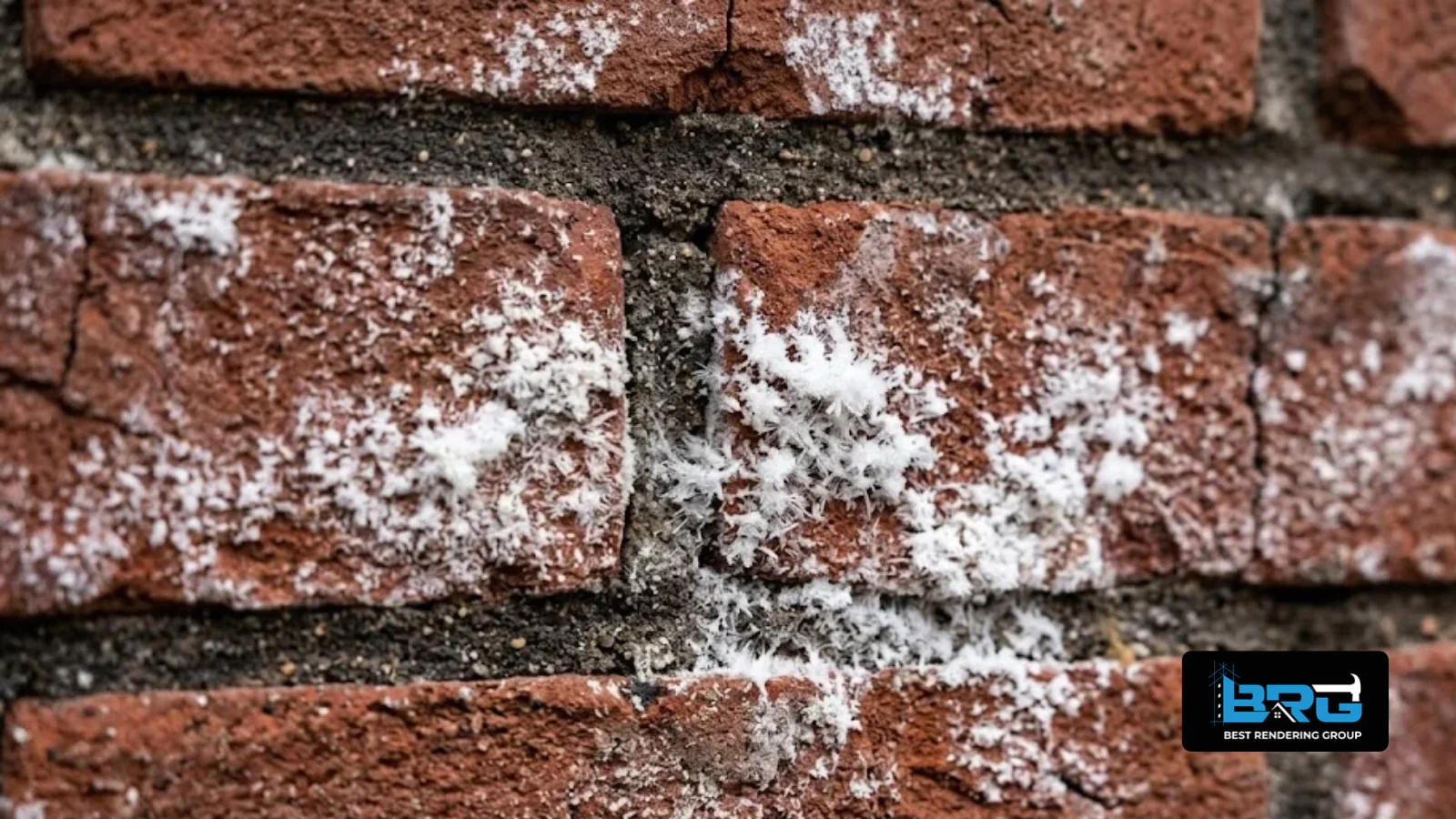
Have you noticed a white, powdery or crystalline substance appearing on your brickwork, mortar joints or rendered exterior walls? This common building issue is known as efflorescence. It can affect both newer homes and older properties, leaving walls looking patchy, stained or poorly finished.
Efflorescence is often caused by moisture moving through porous building materials and carrying dissolved mineral salts to the surface. When the water evaporates, the salts remain behind as a white deposit.
A small amount of efflorescence on new masonry may be temporary. However, if the white powder keeps returning, spreads across the wall or appears alongside bubbling paint, cracked render or damp patches, it is worth investigating the underlying moisture source.
For homeowners in Melbourne’s south-eastern suburbs, understanding the cause is the first step towards protecting the appearance and condition of the property. This guide explains how to identify efflorescence, what causes it, how to manage it safely and when to seek professional advice.
Efflorescence is a deposit of water-soluble mineral salts that forms on the surface of porous materials such as bricks, mortar, concrete and cement-based render.
The process generally involves three conditions:
This is why efflorescence often appears as a fine white powder, a chalky coating or small crystalline deposits.
It may become noticeable after rainfall, during the drying period following construction or when moisture repeatedly passes through a wall. In some cases, the deposits disappear naturally as the materials dry. In others, the problem continues because moisture is still entering or moving through the wall.
Efflorescence can occur on exposed brickwork, rendered masonry, mortar joints, concrete walls and other cement-based surfaces. Its appearance does not automatically mean that a wall is structurally damaged, but persistent deposits should not be ignored.
Efflorescence is associated with moisture movement, but the source of that moisture can vary from one property to another. Identifying the cause is more useful than repeatedly cleaning the surface.
Newly constructed or recently rendered walls may contain residual moisture from the building process. As the wall dries, water can transport soluble salts to the surface.
This can happen during the initial curing and drying period of cement-based materials. The deposit may reduce as the wall dries, provided there is no continuing source of moisture.
However, do not automatically assume that white deposits on a new wall are harmless. If they are extensive, accompanied by deterioration or continue to return, the wall should be assessed.
Damaged gutters, leaking downpipes and overflowing stormwater systems can direct water onto exterior walls instead of carrying it away from the building.
Repeated wetting may allow moisture to enter porous brickwork or render, increasing the likelihood of efflorescence. Check for staining below gutter joints, around downpipes and beneath roof drainage points.
A drainage problem should be corrected before the affected wall is cleaned or refinished.
Water that collects beside the house can increase moisture exposure, particularly around the lower sections of external walls.
Look for garden beds or paving that direct water towards the building, blocked drainage points, persistent puddles and ground levels that may allow moisture to reach areas that should remain dry.
If a concrete path or driveway appears to direct water towards the wall, investigate whether the surface falls and drainage arrangements are appropriate. Depending on the issue, concrete finishing services may be relevant to a separate surface-finish problem, although drainage and waterproofing concerns may require another qualified trade.
Flashing helps direct water away from vulnerable junctions in a building. If flashing is missing, damaged or incorrectly installed, water may enter around windows, doors, roof junctions or other wall penetrations.
Efflorescence below a window, near a wall junction or around an opening can be a reason to inspect the surrounding details.
The location of the deposit may provide a clue, but it does not confirm the source on its own. A suitable building professional should investigate suspected water entry before repairs begin.
Moisture can sometimes move upwards through masonry from the ground, carrying dissolved salts with it. Possible contributing factors include a defective or bridged damp-proof course, unsuitable ground levels and persistent moisture around the base of the building.
Deposits concentrated along the lower portion of a wall deserve particular attention, especially when accompanied by peeling paint, damaged skirting boards, crumbling mortar or deteriorating render.
Not every white deposit near ground level is caused by rising damp. An assessment is needed to distinguish between possible causes and avoid unnecessary repairs.
Brickwork and other porous materials can absorb moisture when exposed to rain. Incomplete roof drainage, unprotected masonry during construction or delays in completing vulnerable junctions can allow additional water to enter the structure.
In Melbourne, changing weather conditions can make it important to consider how exposed walls are getting wet and how effectively they can dry afterwards.
A suitable wall finish and good construction detailing can help manage moisture exposure, but no surface coating should be treated as a substitute for correcting a leak or drainage defect.
Efflorescence is not always a sign of major damage. A limited deposit on otherwise sound, newly completed masonry may be mainly cosmetic and may diminish as the material dries.
The concern increases when the deposits are persistent, widespread or associated with other signs of deterioration.
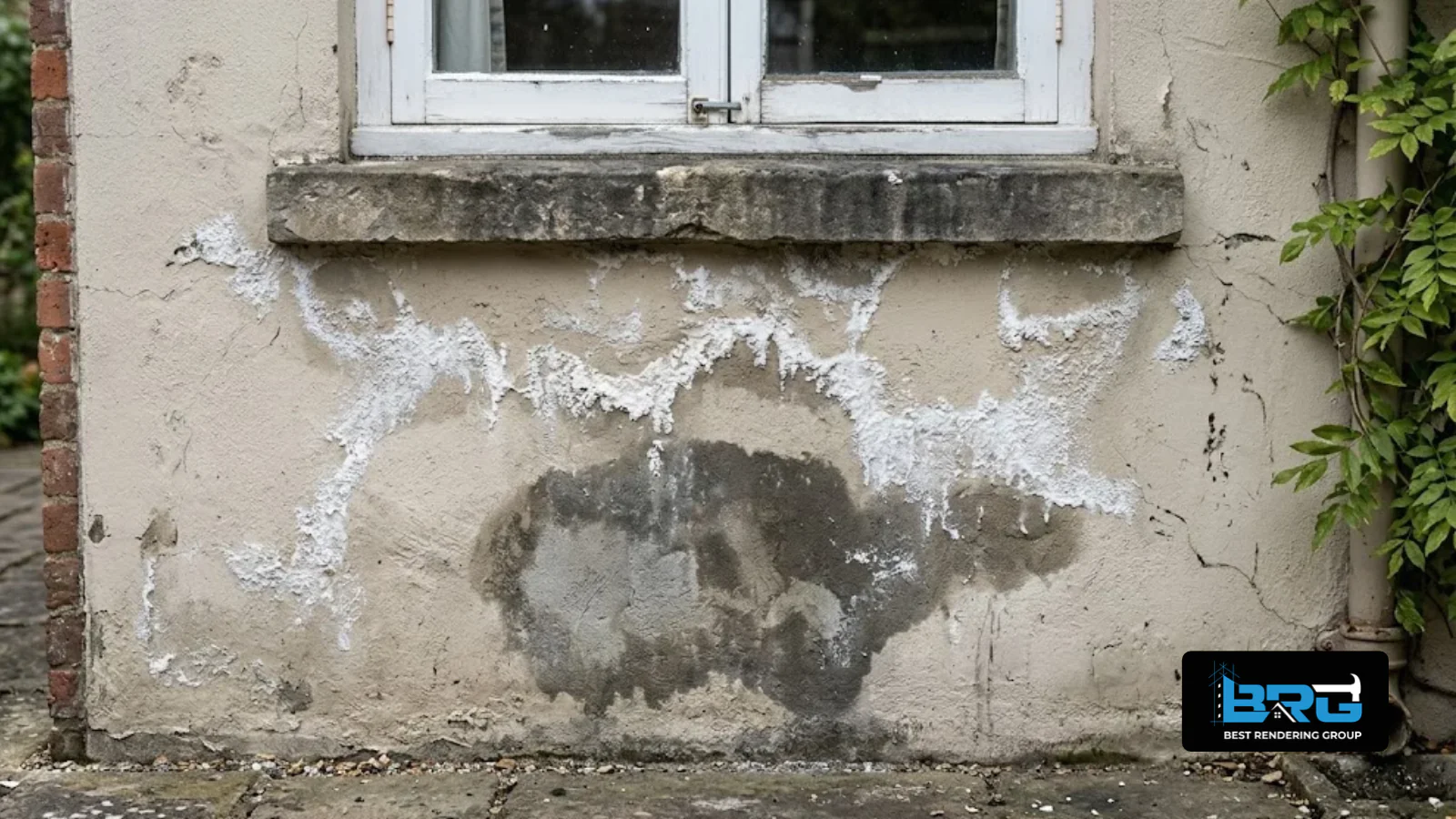
Watch for the following:
These symptoms do not all have the same cause. For example, recurring cracks may need a different investigation from salt deposits caused by moisture movement. If the wall shows recurring render damage, the underlying reason should be understood before another repair or coating is applied.
The main priority is to determine whether the deposit is a temporary surface issue or evidence of a continuing moisture problem.
The appropriate cleaning method depends on the material, the condition of the surface and the severity of the deposits. A method that is suitable for one type of brickwork may damage a painted or textured rendered finish.
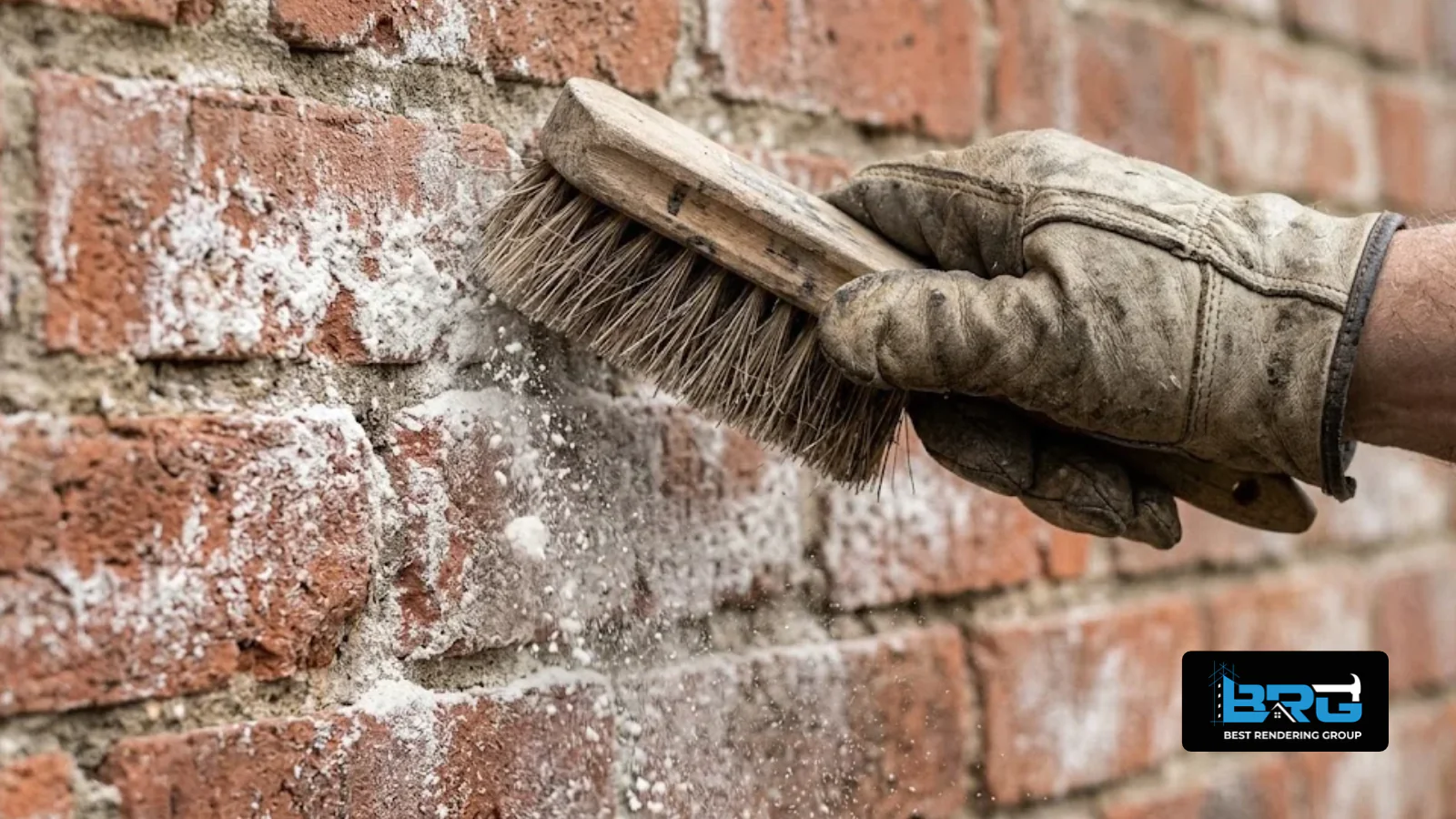
Determine whether the deposit is on exposed brick, mortar, unpainted render, painted render or concrete. Check whether the surface is sound or already showing signs of peeling, cracking, softening or separation.
If the finish is unfamiliar or fragile, seek advice before using cleaning products or equipment.
Where practical, allow the affected area to dry before attempting to remove loose efflorescence. Moisture can dissolve the salts and move them further into porous materials, potentially allowing deposits to reappear as the wall dries again.
Avoid repeatedly soaking the wall in an attempt to clean it.
For light deposits on sound, unpainted masonry, a suitable stiff-bristled brush may help remove loose powder once the surface is dry. Work gently and collect the loosened material rather than spreading it across adjacent surfaces.
Test a small, inconspicuous area first. Do not use an abrasive brush on delicate, painted or textured render without confirming that the finish can tolerate it.
If the deposit is heavy, firmly attached or accompanied by surface deterioration, stop and seek professional advice.
Do not immediately reach for strong acids, aggressive chemical cleaners or high-pressure washing equipment. These methods can damage some masonry, mortar, paint systems and rendered finishes.
Cleaning products may also be unsuitable for particular materials. If a proprietary efflorescence remover is being considered, follow its instructions, check compatibility with the surface and test an inconspicuous area first. Extensive or delicate work is better assessed by an experienced professional.
This is the most important step when efflorescence returns or appears alongside dampness and surface damage.
Check accessible areas for leaking gutters, downpipes, roof drainage problems, gaps around openings, water pooling beside the house and other visible signs of water entry. Do not undertake hazardous roof work or dismantle building elements yourself.
Where the cause is unclear, a qualified building professional or the appropriate trade may need to investigate further.
Do not simply paint over the white deposits. Residual salts, continuing moisture or an unsuitable surface can compromise the adhesion and performance of new coatings.
Before repainting or applying a new finish, the moisture issue should be addressed, loose deposits removed appropriately and the substrate allowed to dry to the requirements of the selected coating system.
If the render itself is cracked, loose or deteriorating, the appropriate solution may involve render repair and restoration after the cause of the damage has been established.
There is no single treatment that prevents every instance of efflorescence. Prevention depends on controlling moisture, using suitable materials and ensuring that the wall can dry as intended.
Consider the following measures:
Maintain roof drainage. Keep gutters and downpipes in good condition, and arrange repairs when leaks or overflows are identified.
Keep water away from external walls. Check drainage around garden beds, paths, driveways and other paved areas. Address persistent pooling rather than relying on surface treatments.
Inspect junctions and openings. Have suspected problems with flashing, window seals, roof junctions and wall penetrations assessed and repaired appropriately.
Use suitable materials and application methods. Rendering work should account for the substrate, surface preparation, product requirements and site conditions. Correct curing and protection during construction can help reduce avoidable moisture-related problems.
Investigate recurring deposits early. Repeatedly brushing away the powder does not correct the cause if water continues to move through the wall.
Choose compatible coatings and finishes. Before painting or applying a new finish, confirm that the substrate is sufficiently dry and properly prepared in accordance with the product manufacturer's instructions.
For homeowners planning new work or updating a property's exterior, professional rendering services can help establish an appropriate approach to wall preparation, application and finishing. The specific solution will depend on the existing surface and the source of any moisture.
Efflorescence can appear on properties throughout Melbourne and is not limited to a particular suburb or building age. The most useful starting point is the condition of the wall, its exposure to moisture and the details around the affected area.
Best Rendering Group is based in Cranbourne and services homeowners, builders and property owners across Melbourne's south-east.
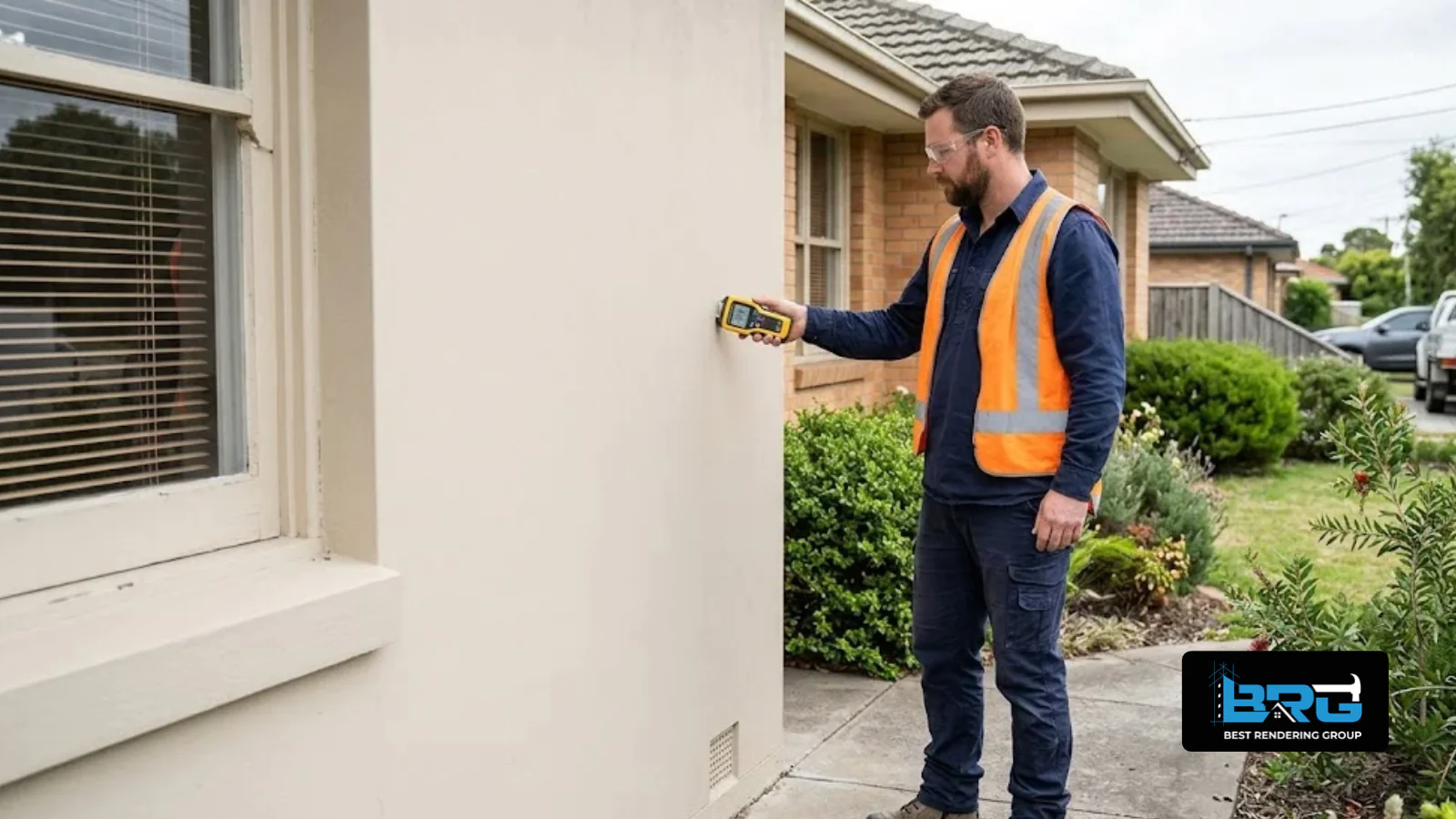
If you have noticed white deposits on a property in Cranbourne, Berwick, Pakenham, Frankston, Dandenong or Rowville, the same principle applies: identify why the wall is getting wet before deciding how to clean, repair or refinish it.
The right response may be simple cleaning, correcting a drainage issue, repairing a water entry point or arranging further assessment of damaged render. These are different jobs, so the remedy should match the cause rather than assume that every white deposit requires a complete re-render.
You can also read our guide to exterior wall rendering to learn more about exterior wall finishes and the considerations involved in rendering a home.
Consider arranging an assessment if the white powder repeatedly returns, affects a large area, appears with cracking or peeling, or is accompanied by damp patches that do not resolve.
A rendering professional can assess visible surface conditions and advise whether render repair or further investigation may be appropriate. If the evidence points to a plumbing leak, drainage fault, roof problem or waterproofing issue, the relevant specialist may need to address that cause before rendering work proceeds.
Professional advice is particularly useful before spending money on repainting or applying another coating. A new finish may improve the appearance temporarily, but it will not reliably solve continuing moisture movement through the wall.
Best Rendering Group provides rendering services across Melbourne's south-eastern suburbs. If you are concerned about white deposits, damaged render or the condition of your exterior walls, you can discuss your wall's condition with the team and explain what you have noticed.
1. Is the white powder on my brick wall mould or efflorescence?+
Efflorescence is generally a powdery or crystalline mineral deposit left behind when moisture evaporates from masonry. Mould is biological growth and may look fuzzy, spotty or discoloured. Appearance alone is not always enough to distinguish them, particularly when dampness is present. If you are unsure, arrange an appropriate assessment before cleaning the surface.
2. Will efflorescence disappear on its own?+
Some deposits on new masonry may reduce naturally as the materials dry. However, efflorescence may continue to appear if moisture keeps moving through the wall. Monitor the affected area and investigate recurring deposits rather than assuming they will disappear permanently.
3. Can I paint over efflorescence?+
Painting directly over efflorescence is not recommended. Salt deposits can interfere with coating adhesion, and continuing moisture may cause paint to blister, peel or deteriorate. The source of moisture should be addressed, the surface prepared appropriately and the substrate confirmed as suitable for the selected coating.
4. Does efflorescence mean that my render needs replacing?+
No. Efflorescence alone does not automatically mean that render needs to be replaced. The surface may only require appropriate cleaning, but persistent deposits or visible deterioration may indicate a problem that needs further investigation. The condition of the render and the underlying cause should guide the repair decision.
5. Why does white powder return after I clean it?+
Efflorescence can return when moisture continues to dissolve and carry salts through the material. Surface cleaning removes the visible deposit but does not necessarily prevent the process from happening again. Recurring deposits are a reason to investigate drainage, leaks, ground moisture and other potential sources of water entry.
6. Can efflorescence damage painted or rendered walls?+
A small, temporary deposit may be mainly cosmetic. Persistent moisture and salt migration, however, can contribute to coating failure and deterioration of some materials. Watch for bubbling paint, flaking, cracks, loose render or crumbling surfaces, and seek advice if these symptoms appear.
7. Should I use a pressure washer or acid cleaner to remove the white deposits?+
Not as a first step. High-pressure washing and unsuitable chemical cleaners can damage masonry, mortar and rendered finishes. A gentle, surface-compatible method is preferable for light deposits on suitable materials. For heavy deposits or delicate finishes, ask an experienced professional to recommend an appropriate treatment.
8. Does Best Rendering Group service homes in Melbourne's south-east?+
Best Rendering Group is based in Cranbourne and services surrounding areas across Melbourne's south-east, including suburbs such as Berwick, Pakenham, Frankston, Dandenong and Rowville. Contact the team to discuss your property's location and the condition of its exterior walls.
White powder on brick and rendered walls is often efflorescence: mineral salts brought to the surface by moisture. While some deposits on new masonry may be temporary, repeated or widespread efflorescence deserves closer attention, particularly when the wall also shows damp patches, cracking, peeling paint or deteriorating render.
The most effective approach is to identify the moisture source, select a cleaning method suited to the surface and make sure the wall is properly prepared before repainting or refinishing.
If you have noticed recurring white deposits or are concerned about the condition of your exterior walls, contact Best Rendering Group to discuss the issue and determine whether a rendering assessment is appropriate.