
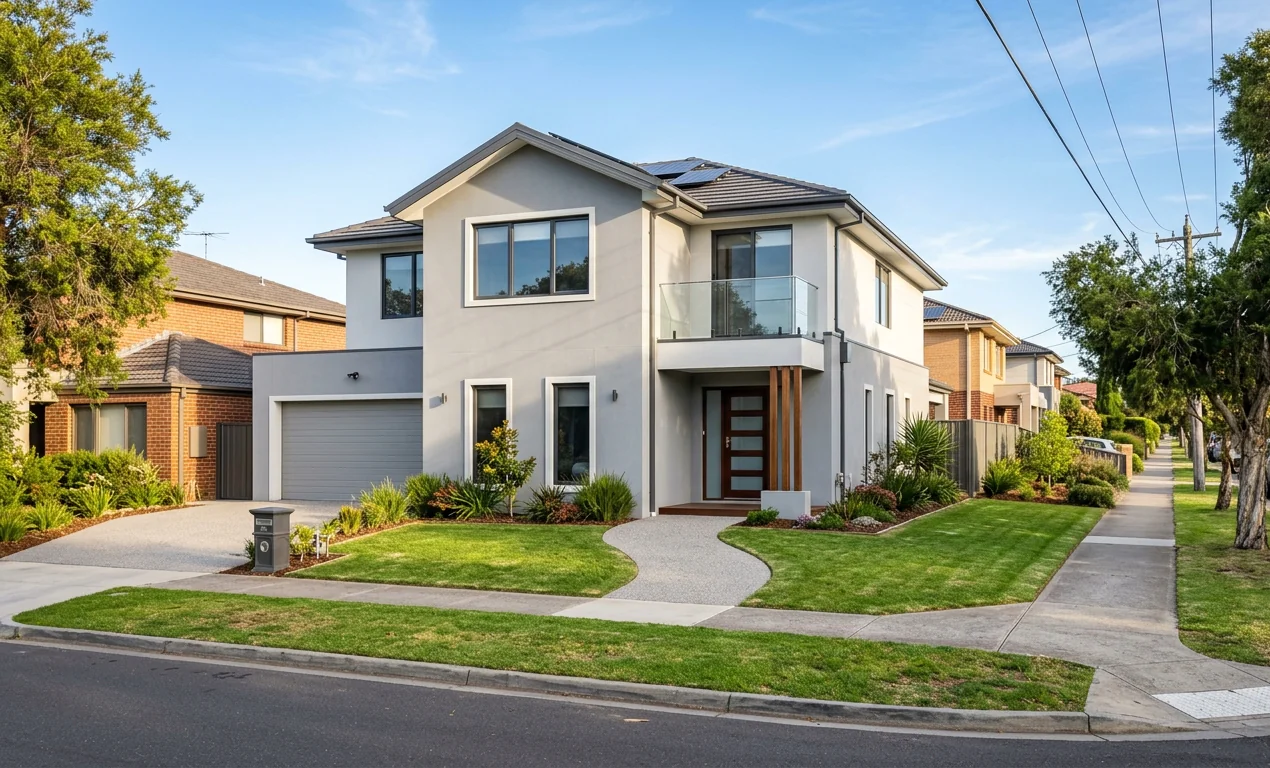
If you are considering exterior wall rendering in Melbourne – whether your home’s facade is looking tired, the walls are showing cracks, or you simply want a cleaner finish – this guide covers exactly what you need to make a confident decision. Rendering is one of the most effective ways to protect and transform a Melbourne home, and understanding it properly saves time, money, and frustration.
This guide covers the types of render available, realistic costs across Melbourne, what the process looks like on a typical job, and how to choose a renderer who will do the work properly. Nothing more than what you need.
What Exterior Wall Rendering Does for Your Melbourne Home
Exterior wall rendering is the application of a protective coating – typically cement or acrylic-based – directly to your home’s external walls. It covers brick, concrete block, or masonry and gives the surface a uniform finish, whether smooth, textured, or patterned.
The protective side matters just as much as the visual result. A properly rendered wall resists moisture penetration, handles temperature changes better, and reduces the wear that Melbourne’s climate puts on exposed brick and masonry year after year.
For homeowners in the south eastern suburbs – areas like Cranbourne, Berwick, Frankston, and Dandenong – this is particularly relevant. The combination of wet winters, hot summers, and soils that shift seasonally means your external walls take more stress than you might think.
The Three Types of Exterior Wall Rendering Used on Melbourne Homes
Choosing the right render type depends on how your home is built, its age, and the finish you want. These are the three most common options used for exterior wall rendering in Melbourne.
Cement Render
The traditional option. Cement render is a mix of sand, cement, and water applied directly to the wall surface. It bonds well to solid brick and masonry, produces a hard-wearing finish, and has been used on Australian homes for generations.
The limitation is flexibility. Cement render does not move with a structure. If your home shifts – even slightly with the seasons – cement render is more likely to crack. This makes it better suited to older, solid brick homes where the structure has already settled.
Acrylic Render
Acrylic render is the more common choice on new builds and renovations in Melbourne’s south eastern suburbs. It contains polymer additives that give it flexibility – it can handle the minor movement that all homes experience without cracking under the pressure.
It comes pre-coloured, which means no painting is required after application. The range of finishes is wide – fine sand, coarse texture, smooth, scraped – and the colour holds well over time with minimal maintenance.
Polymer Render
Polymer render is typically used over lightweight cladding systems – foam panels, Hebel, or fibre cement. It is more flexible than either cement or standard acrylic render, making it the right choice when the substrate is not solid masonry. If your home has a Hebel or foam cladding system, polymer render is almost certainly what you need.
| Type | Best Suited To | Flexibility | Est. Cost/m2 |
|---|---|---|---|
| Cement | Solid brick, older homes | Low | $25 – $40 |
| Acrylic | New builds, renovations | High | $40 – $60 |
| Polymer | Hebel, foam, lightweight cladding | Very High | $50 – $75 |
Exterior Wall Rendering Cost in Melbourne: What to Expect in 2026
Cost depends on four main variables: the total surface area, the render type chosen, whether existing render needs to be removed first, and access requirements such as scaffolding for two-storey homes.
As a general guide for Melbourne exterior wall rendering jobs in 2026:
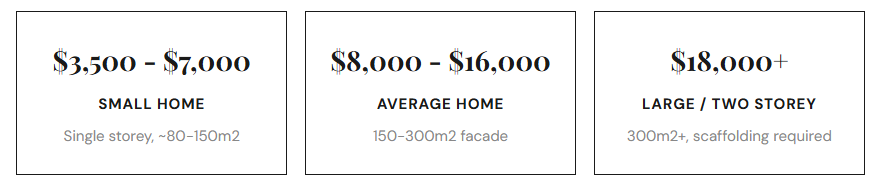
These figures assume a standard job with no major remediation work needed. If the existing render is failing and needs to be stripped back, or if significant wall repairs are required before the new render goes on, costs will be higher. Any renderer who quotes without inspecting the existing surface should be treated with caution.
A note on cheap quotes: Rendering done with inadequate surface preparation or thin coats will crack within a few years. The cost of stripping and re-doing a failed render is significantly higher than doing the job properly the first time. Price is worth comparing – but it should not be the deciding factor.
The Exterior Wall Rendering Process: Step by Step
Understanding the process helps you evaluate whether a renderer is cutting corners. A proper exterior rendering job in Melbourne follows these stages:
- Surface inspection and preparation. The existing wall surface is checked for cracks, hollow sections, moisture issues, and loose material. Anything that would compromise the new render is addressed before application begins. This is the most important step and the one most often rushed.
- Cleaning and priming. Walls are cleaned of dust, oils, and loose particles. A bonding primer is applied where needed to improve adhesion, particularly on smooth or previously painted surfaces.
- Base coat application. The first coat is applied evenly across the surface. It is scratched back to create a mechanical key for the finish coat and left to cure – typically 24 to 48 hours depending on conditions.
- Finish coat. The final coat determines the texture and appearance. This is applied consistently across the surface, with all edges, reveals, and joins finished neatly.
- Final inspection and handover. The completed render is checked for consistency, coverage, and quality before the job is signed off.
Most standard homes in Melbourne’s south eastern suburbs take two to four days of active work. Factor in curing time between coats, and the total project window is typically five to seven days from start to handover.
Choosing an Exterior Wall Rendering Contractor in Melbourne
The renderer you choose matters more than the type of render. A quality product applied badly will still fail. These are the things worth checking before you commit.
Registration and insurance. In Victoria, rendering work on residential homes should be performed by a registered building practitioner. Ask to see their registration number and confirm they carry public liability insurance before any work begins.
Local experience. A renderer who works regularly in Melbourne’s south eastern suburbs understands the housing stock, the common wall types, and how local conditions affect application and curing. This is not a small thing.
A portfolio you can verify. Ask for the addresses of recent jobs, not just photos. A renderer confident in their work will not hesitate to share references or locations you can drive past.
Clarity on materials. A professional renderer can tell you exactly what product they are using, what system it belongs to, and what warranty the manufacturer provides. Vagueness on this point is a warning sign.
Surface preparation conversation. If a renderer talks about colours and finish before they talk about surface condition, that tells you something about how they prioritise the job.
Read independent reviews. Check platforms like Google Reviews and hipages for verified customer feedback on local Melbourne renderers before committing.
Exterior Wall Rendering vs. Painting: Which is Right for Your Melbourne Home?
Both options will change the look of your home’s exterior. They are not the same thing and do not solve the same problems.
Painting is cheaper in the short term – typically $2,000 to $5,000 for an average Melbourne home. It refreshes colour and provides a thin layer of surface protection. It does not fix cracked or porous walls, and exterior paint in Melbourne’s climate will need redoing every seven to ten years.
Exterior wall rendering in Melbourne costs more upfront but addresses the wall itself. It covers surface imperfections, adds genuine weather resistance, and with acrylic render, the colour is embedded in the material – reducing ongoing maintenance considerably. A quality render, applied properly, should last twenty to thirty years.
If your walls are structurally sound and in reasonable condition, painting is a reasonable option. If there are cracks, moisture issues, or significant surface deterioration, rendering is the appropriate solution – not a coat of paint on top of a problem.
The Takeaway
Exterior wall rendering is a long-term investment in the condition and appearance of your home. Done properly, it protects your walls for decades and significantly changes how your property presents. Done poorly, it becomes an expensive problem within a few years.
The decision on type – cement, acrylic, or polymer – comes down to your home’s construction and condition. The decision on who does the work comes down to their experience, transparency, and how seriously they take surface preparation.
If you are based in Melbourne’s south eastern suburbs and want an honest assessment of your home, Best Rendering Group is available for a free consultation. No obligation, no sales pitch – just a straightforward look at what the job actually involves.
Frequently Asked Questions About Exterior Wall Rendering in Melbourne
Applied correctly with quality materials, exterior wall rendering will last twenty to thirty years in Melbourne’s climate. Acrylic renders hold up particularly well given their flexibility. The primary factors affecting longevity are surface preparation quality and the materials used – not the brand name or colour.
Sometimes. If the existing render is well-bonded, structurally sound, and not hollow or cracked, a finish coat over the top may be possible. If the existing render has failed in sections, stripping back and starting fresh produces a far more reliable result. A proper assessment before quoting is essential.
No. Acrylic render is supplied pre-coloured. The colour is part of the material itself, not a surface coating applied on top. This is one of the reasons acrylic render requires less ongoing maintenance than cement render, which typically needs painting after application.
In most cases, no. Rendering is considered maintenance rather than a structural change. If your property sits within a heritage overlay or specific council zone, there may be material or colour restrictions. Check with your local council if you are unsure – your renderer should also be familiar with local requirements. You can verify planning overlays through the Victoria Planning Authority’s mapping tool.
Yes, with appropriate planning. Render requires temperatures consistently above 10 degrees Celsius and no rain for at least 24 to 48 hours after application. Most professional renderers in Melbourne plan around the forecast and schedule accordingly. Spring and autumn offer the most reliable conditions, but winter work is possible in the right window.
Related Services
Rendering Services Melbourne · Plastering Services · Hebel Installation · Concrete Finishing