
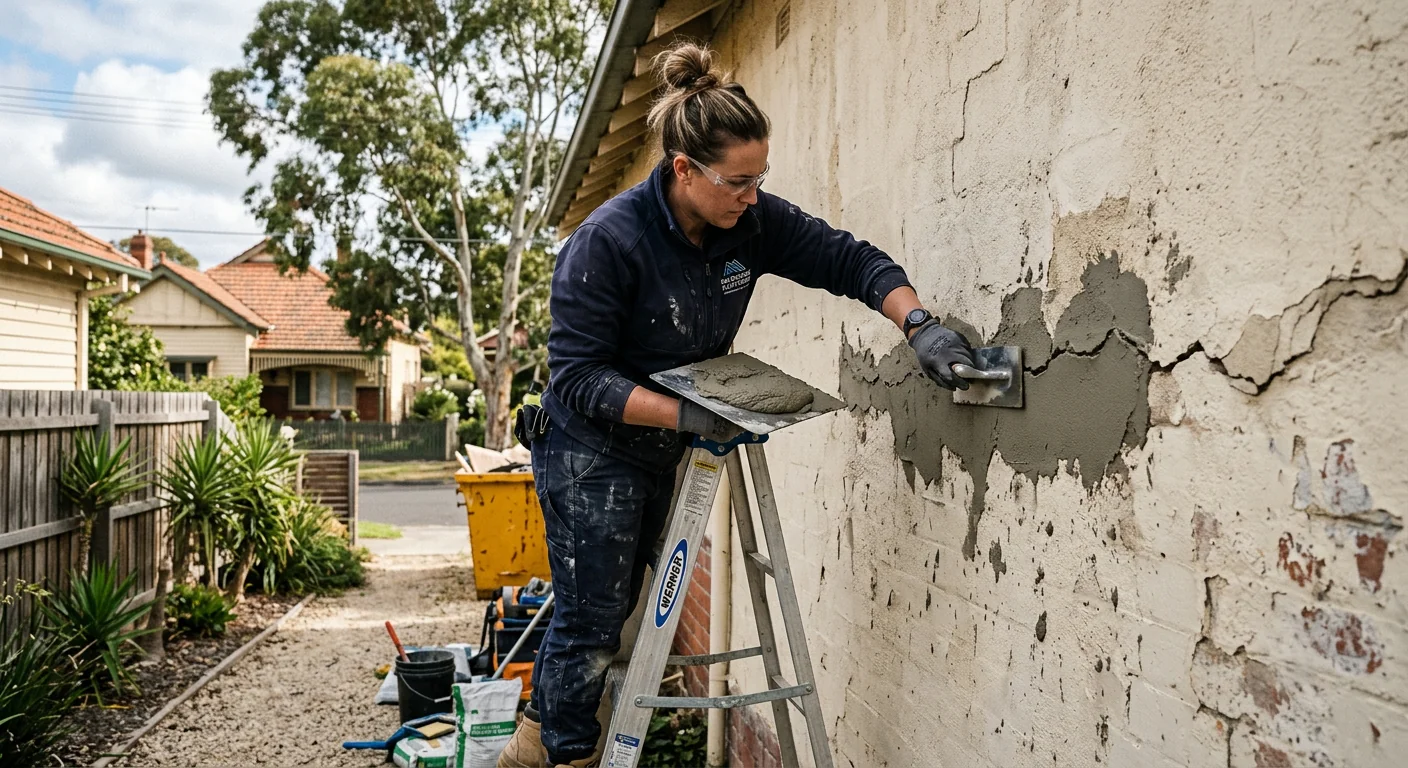
If cracks, bubbling or damaged render have started appearing on your property, professional render repair (Best Rendering Group) can often restore the affected area without requiring a complete re-render.
This guide covers why render actually cracks and fails, how to tell the difference between a cosmetic crack and a structural one, what repair typically costs depending on scope, and what the repair process looks like once someone's on site. If you're staring at a hairline crack wondering whether it's a quick fix or the start of a bigger problem, this should help you work out which.
Most render damage in Melbourne comes down to one of a handful of causes, and they're almost always related to how the original job was done rather than bad luck. Render applied too thick, too thin, or in the wrong weather window doesn't cure evenly, and that uneven cure is exactly what shows up as cracking a year or two later. Poor surface prep before the original coat — not cleaning the substrate properly, or applying over a surface that wasn't sound — is the other big one, and it's invisible until the render starts failing from underneath.
Melbourne's climate doesn't help either. The same wet-winter, dry-summer swing that makes proper rendering important in the first place is what stresses an already-compromised render job until it cracks, bubbles, or starts pulling away from the wall. A render job that was done properly the first time generally handles this cycle for fifteen to twenty years without issue — it's the corners cut early on that show up later as a repair call.

Not all render damage is equal, and knowing which category yours falls into changes the whole repair conversation.
Thin, shallow cracks across the render surface that don't step or show movement are usually a straightforward patch repair — clean out the crack, fill, blend, and repaint the section.
Cracks that run diagonally from windows or corners, step visibly, or continue through the brick underneath usually point to movement in the structure itself, not just the render. These need the underlying cause addressed, not just the crack filled.
Render that's bubbling, hollow-sounding when tapped, or visibly lifting away from the wall has failed its bond to the substrate. This section generally needs to be removed and re-applied rather than patched, since a patch over a delaminating area will fail again quickly.
Dark staining, efflorescence, or persistent damp patches usually mean water is getting in somewhere — often through a crack that's been left unrepaired, or a flashing or sealant issue nearby. Fixing the render without addressing the water entry point just means repeating the repair in a year.
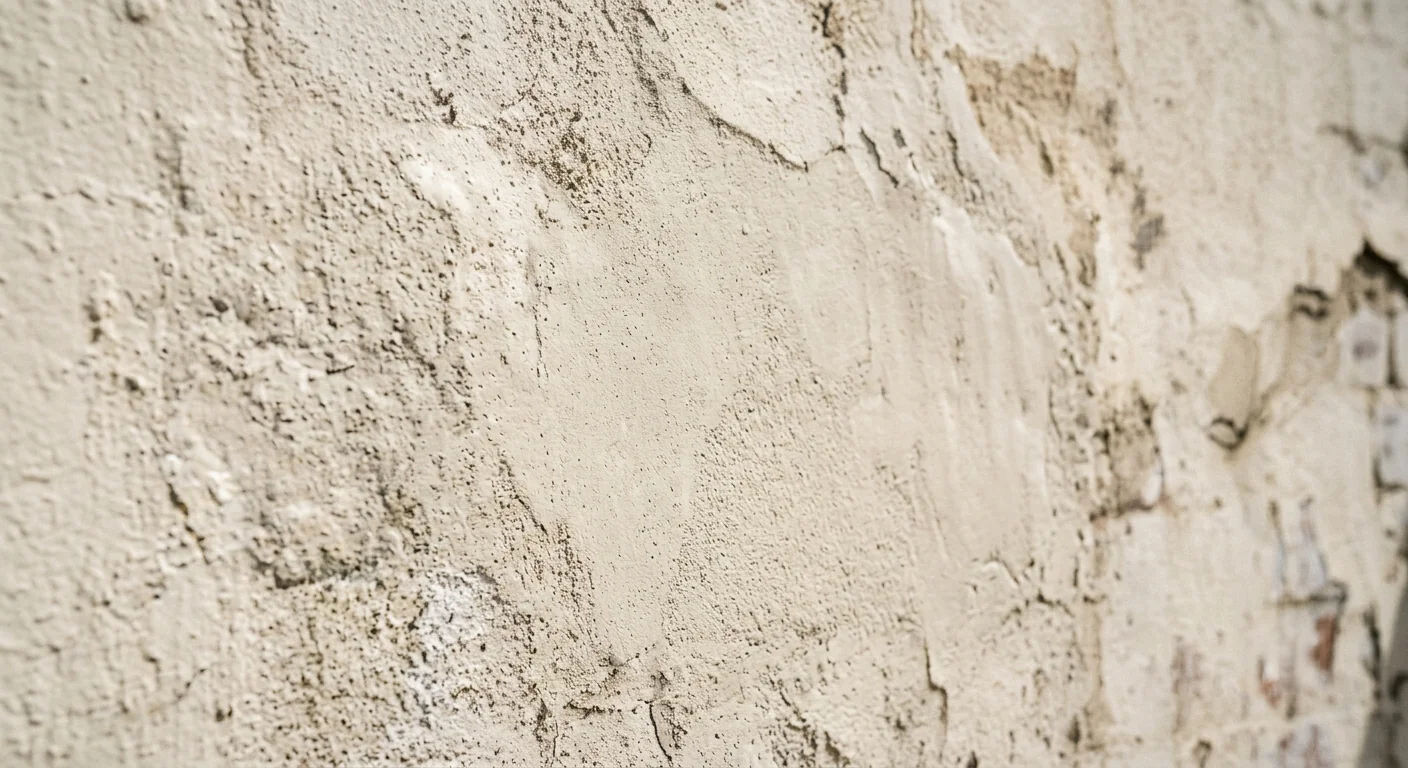
If a crack keeps coming back through fresh paint, painting alone was never going to fix it — the render underneath needs attention.
A hollow or dull sound when you knock on the render usually means it's separated from the wall behind it.
Persistent dark patches or staining point to water getting in somewhere, which repainting won't resolve on its own.
Diagonal cracking from these points is a common sign of structural movement rather than a simple surface issue.
Cost depends on the extent of damage and whether the cause needs addressing beyond the render itself. These figures are a starting guide — an accurate quote needs an on-site look at the damage.
How do I know if a crack is cosmetic or structural?+
A thin, shallow crack that doesn't step or show movement is generally cosmetic and repairable with a patch. Cracks that run diagonally from windows or corners, step visibly, or continue through the brick underneath usually point to structural movement and need a different approach.
How much does render repair cost in Melbourne?+
A minor patch repair typically costs between $400 and $1,200, while a larger section repair generally runs from $1,500 to $4,500 depending on the extent of damage. Widespread damage that no longer suits patching is quoted as a full re-render.
Can render repairs be made invisible?+
A skilled repair blends closely with the surrounding render in both texture and colour, though a perfect invisible match depends on the age and fade of the existing render. Repairs done soon after damage appears generally blend better than ones left for years.
Why does render crack even when it was installed properly?+
Even well-installed render can develop minor cracking over many years due to Melbourne's temperature swings and natural building movement. The difference is that a properly installed render generally only needs minor maintenance after fifteen to twenty years, rather than failing within the first few.
Should I repair render myself or hire a professional?+
Minor cosmetic touch-ups are sometimes manageable as a DIY job, but matching texture and colour convincingly, and correctly diagnosing the cause of the damage, generally needs professional experience. A poorly matched or incorrectly diagnosed DIY repair often costs more to fix properly later.
How urgent is render repair once I notice damage?+
Cracks that let water in tend to get worse quickly once Melbourne's wet season sets in, so it's worth addressing damage before winter rather than after. A small, cheap patch repair now is almost always less costly than a larger section repair later.
The repairs that actually last are the ones where someone bothered to work out why the render failed in the first place, rather than just filling the crack and moving on. A wall in Berwick facing full western sun cracks for different reasons than a shaded south-facing wall in Hampton Park, and the repair approach should reflect that rather than treating every crack the same way. Best Rendering Group has repaired render across homes and commercial properties throughout Cranbourne, Narre Warren, and the wider south east, and every repair starts with working out the actual cause before anything gets patched.
If you've noticed cracking, bubbling, or staining on a rendered wall, get in touch with our team for an honest assessment before it gets worse over winter.