
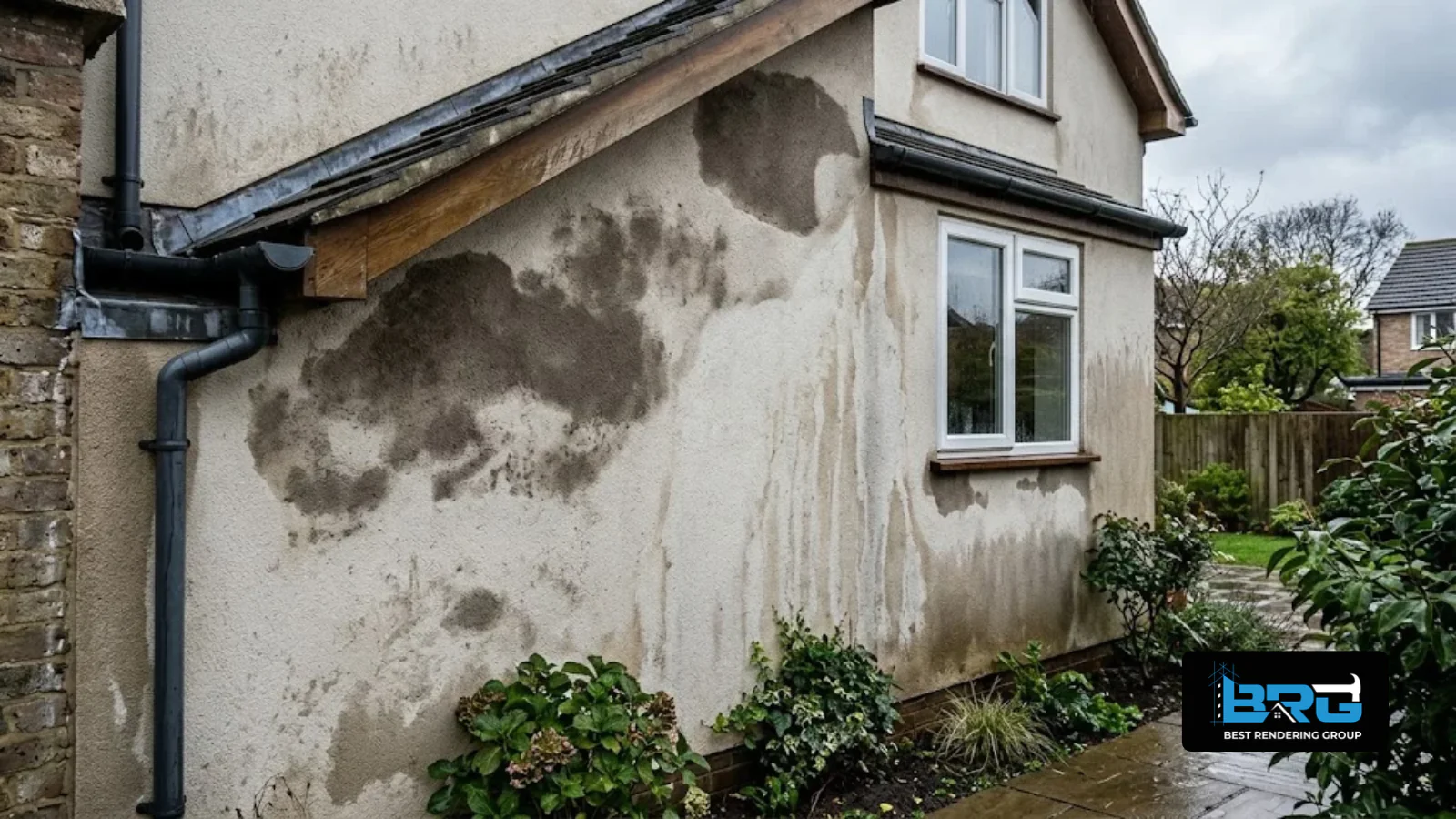
Have you noticed dark patches, discolouration, peeling paint or white salt deposits appearing on your rendered walls? These signs can be frustrating, particularly when the exterior of your home was rendered recently or looked perfectly fine only a few months ago.
Damp patches on rendered walls are often a sign that moisture is entering, accumulating within or moving through the wall. The source may be something visible, such as a leaking downpipe, or a less obvious issue involving flashing, drainage, plumbing or the building's moisture protection.
Simply cleaning the surface or applying another coat of paint may not solve the problem. If moisture continues to enter the wall, the staining can return and the render or paint finish may deteriorate further.
For homeowners across Melbourne's south-eastern suburbs, understanding the possible causes is an important first step towards choosing the right solution.
In this guide, we explain why rendered walls develop damp patches, the warning signs to look for, what you can safely check around your home and when professional assessment may be necessary.
Dampness does not always appear as visible water running down a wall. Depending on where the moisture originates and how the wall is constructed, the signs may be subtle at first.
Common warning signs include:
These symptoms can have different causes, so appearance alone is not enough to identify the exact problem. For example, a dark patch could indicate moisture within the wall, while surface algae or dirt may produce a similar appearance.
The location, timing and pattern of the staining can help narrow down the possibilities, but the underlying cause should be confirmed before repairs are planned.
Gutters and downpipes are designed to collect rainwater and direct it away from the building. When they leak, overflow or become blocked, water may repeatedly run down the external walls.
Over time, porous masonry and rendered surfaces may absorb some of this moisture, particularly where the wall is exposed to repeated wetting and does not dry effectively.
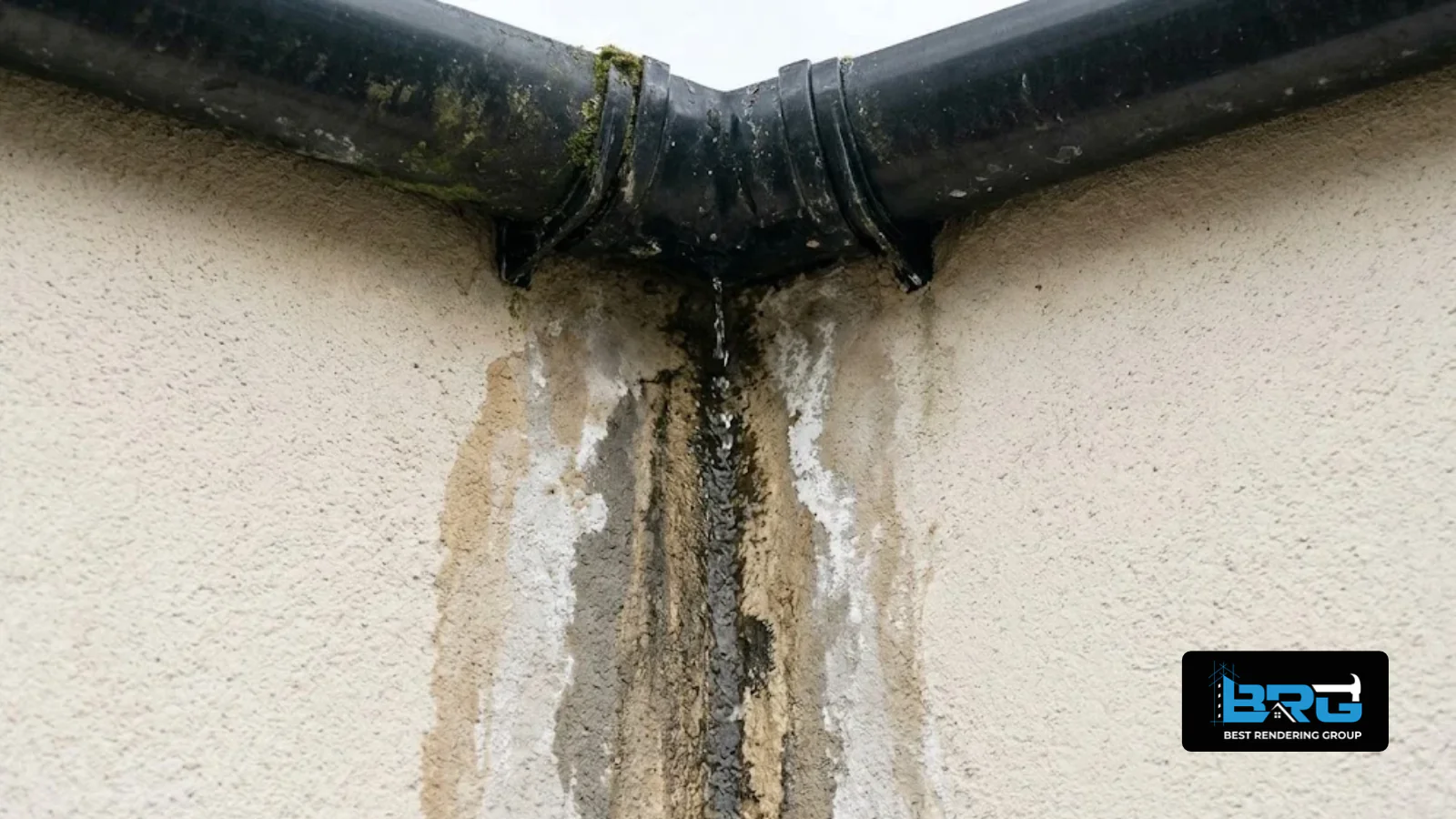
Look for:
A damp patch that appears below a gutter joint or downpipe may indicate a drainage issue, although the location alone does not prove the cause.
Arrange repairs to leaking or damaged roof drainage components and ensure stormwater is directed appropriately. If the rendered surface has also cracked or deteriorated, it may need to be assessed after the water source has been corrected.
Repairing the render before fixing an active leak can result in the same problem returning.
Flashing helps direct water away from vulnerable joints in a building. If it is missing, damaged or incorrectly installed, rainwater may enter the wall assembly instead of draining away.
This can be particularly difficult to diagnose because the visible damp patch may appear some distance from the point where water enters.
For instance, moisture could enter around a window opening and become visible below the sill or along an adjacent wall. Similarly, a roof junction may allow water to enter behind the exterior finish.
Pay attention to:
Sealant and flashing serve different purposes, and applying new sealant over an existing problem may not provide a lasting solution. The relevant junction should be inspected to determine whether water is being directed away correctly.
Where faulty flashing or building detailing is suspected, the appropriate building professional should investigate and arrange the necessary repairs before the wall is refinished.
Cracks can allow water to reach the underlying substrate, depending on their depth, location and the wall construction. Small hairline cracks are not necessarily evidence of serious water ingress, but wider, recurring or deteriorating cracks deserve attention.
The cause may involve movement in the substrate, insufficient preparation, unsuitable materials, failed joints or other building-related factors.
Filling a crack may improve the appearance of the wall, but the repair may fail again if the original cause remains.
For example, recurring cracks associated with building movement need a different response from minor surface cracking. Likewise, cracks near joints, openings or areas exposed to repeated moisture may require a closer inspection.
If you notice signs of recurring render failure, it is worth investigating why the damage continues rather than repeatedly patching the visible area.
The correct repair depends on the condition of the render, the substrate and the cause of the cracking. Some localised damage may be repairable, while extensive deterioration may require more substantial work.
Before repairing or recoating the surface, make sure any active water entry has been addressed. Otherwise, moisture can continue affecting the repaired area.
For suitable repair work, explore professional render repair to understand the available options for damaged or deteriorating render.
Water that collects near the base of an external wall can increase the amount of moisture the building is exposed to. The risk may be greater where paving, garden beds or surrounding ground levels direct water towards the house.
This is worth checking if damp patches appear mainly along the lower portion of a rendered wall, particularly after prolonged or heavy rainfall.
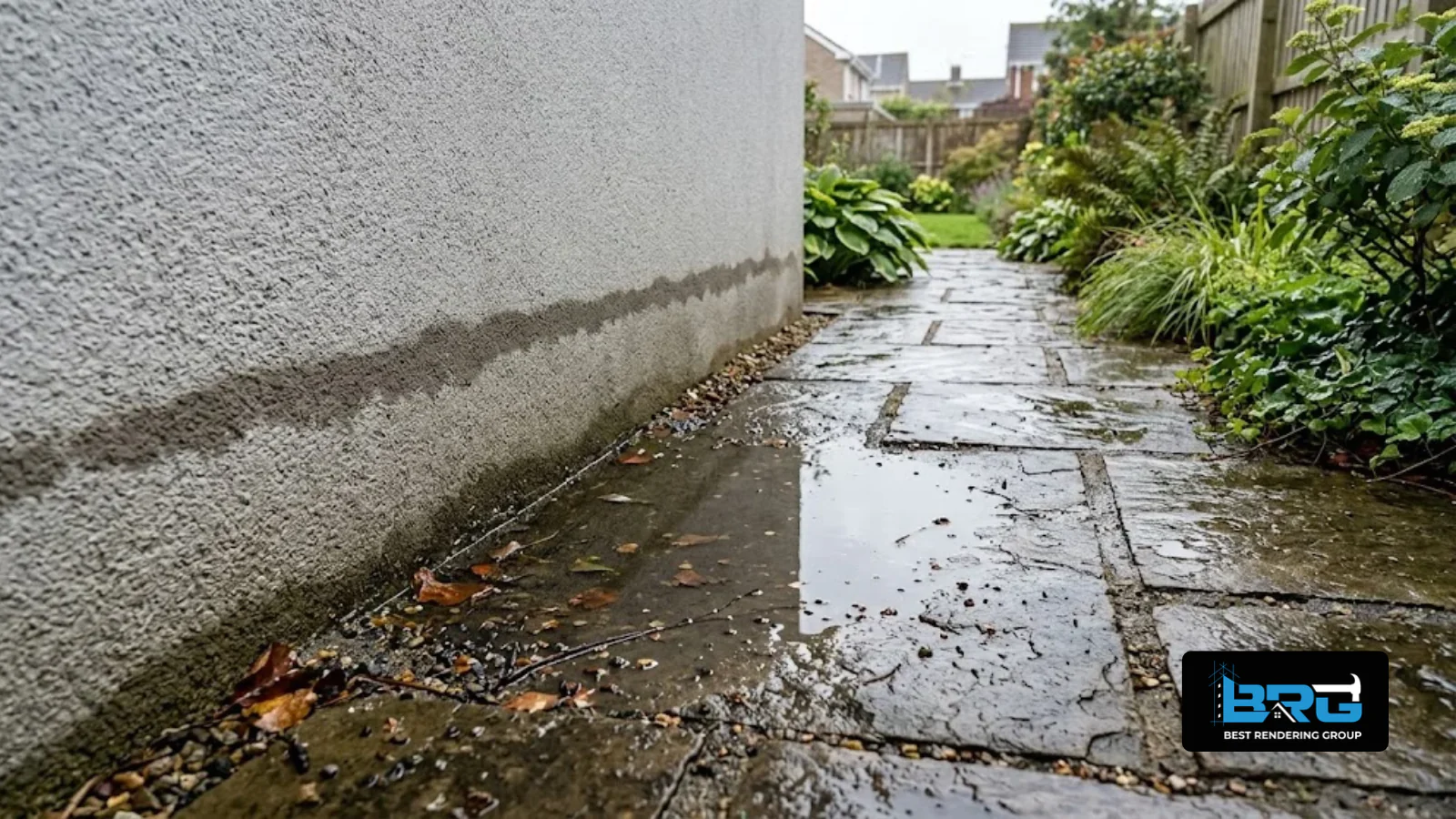
Do not assume that every damp patch near ground level is caused by rising damp. Poor surface drainage, plumbing leaks, water entry through the wall and other issues can produce similar symptoms.
Check whether rainwater flows away from the house and whether water continues to collect beside the walls after rain. Keep drainage points clear and arrange a qualified assessment if the ground levels or drainage system appear unsuitable.
Changes to paving, drainage or ground levels should be planned carefully. In some situations, modifying the ground without considering damp-proofing, wall cavities or other building details can create additional problems.
Rising damp occurs when ground moisture moves upwards through porous masonry. It may be associated with a defective damp-proof course, a bridged moisture barrier or other conditions that allow moisture to rise through the wall.
The signs can include dampness near the base of a wall, deteriorating coatings, white salt deposits and damaged render.
However, similar symptoms can arise from leaking pipes, poor drainage or rainwater entering the wall. Identifying the correct source is essential because the remedies are not interchangeable.
Consider seeking an assessment if:
Avoid covering the affected area with a new render coat or a non-breathable coating before the moisture problem has been assessed. A surface treatment may conceal the symptoms temporarily without resolving the source.
Depending on the findings, further investigation by a qualified building professional or damp-proofing specialist may be required.
Not all damp patches on external walls are caused by rain. A leaking water supply pipe, waste pipe or other plumbing component can introduce moisture into adjacent building materials.
This possibility is particularly important when the staining is localised, persists during dry weather or appears close to a bathroom, kitchen, laundry or plumbing connection.
These signs are not conclusive, but they can help identify when a plumbing investigation is appropriate.
If a leak is suspected, arrange an assessment by a licensed plumber. Rendering work should generally wait until the leak has been repaired and the wall is ready for the proposed treatment.
Sometimes, moisture-related marks on a wall are connected to internal humidity or condensation rather than water entering directly through the exterior surface.
Condensation occurs when moisture-laden air comes into contact with a cooler surface. It can contribute to mould, discolouration and dampness, particularly in areas with poor ventilation.
Bathrooms, kitchens, laundries and rooms with limited airflow can be more susceptible to condensation-related problems.
The pattern of the dampness may provide clues, although it cannot establish the cause on its own.
Condensation may be more noticeable on cold surfaces or in poorly ventilated rooms. Water ingress may be associated with rainfall, external junctions, plumbing leaks or specific sections of the wall.
If a damp patch appears internally on the wall corresponding to an exterior rendered surface, both internal humidity and external water entry may need to be considered.
Improving ventilation can help manage condensation, but it will not repair a leaking pipe, defective flashing or another building defect. Where dampness or mould persists, investigate the underlying issue rather than relying only on ventilation or cleaning.
A new coat of paint or a surface treatment will not necessarily resolve a moisture problem. If the substrate is damp, contaminated, unstable or unsuitable for the proposed finish, the coating may not adhere properly or perform as intended.
Common warning signs include:
Applying a more resistant coating without resolving the source of moisture can sometimes restrict drying or cause the problem to appear elsewhere. The appropriate coating depends on the substrate, moisture conditions and manufacturer's requirements.
Before refinishing the wall, identify and address any water entry, remove unsuitable or loose material and allow the substrate to reach the moisture conditions required by the selected system.
For a better understanding of available options, read about exterior wall finishes and consider which finish is appropriate for the condition and construction of your wall.
You can carry out a few basic visual checks before arranging professional help. These checks can help you describe the problem clearly, but they cannot replace an inspection where water ingress or building damage is suspected.
Note whether the mark is near the roofline, a window, a downpipe, a wall junction or the base of the house.
Also check whether a corresponding damp patch appears on the inside of the wall.
Record whether the patch becomes darker or larger after rain, or whether it remains unchanged during dry weather.
This information may help narrow down potential causes, although moisture can take time to travel through a wall.
From a safe position, look for visible gutter leaks, blocked downpipes, overflowing outlets and pooling water around the property.
Do not climb onto the roof or attempt hazardous inspections yourself.
Check whether the render is cracked, peeling, bubbling or separating from the underlying surface. Take clear photographs and note whether the damage is spreading or returning after previous repairs.
If you notice loose material or more extensive deterioration, avoid disturbing the affected area unnecessarily.
If the cause is obvious, such as a leaking downpipe, the relevant repair may be relatively straightforward. If water is entering behind the wall, the source may require further investigation.
A rendering professional can assess visible render damage and advise whether repair or refinishing is suitable. Plumbing, roofing, drainage, waterproofing or structural concerns may require a specialist in that field.
There is no single repair method suitable for every damp wall. The correct approach depends on where the moisture originates, how far it has travelled and whether the render or underlying substrate has deteriorated.
A sensible repair process generally involves the following stages.
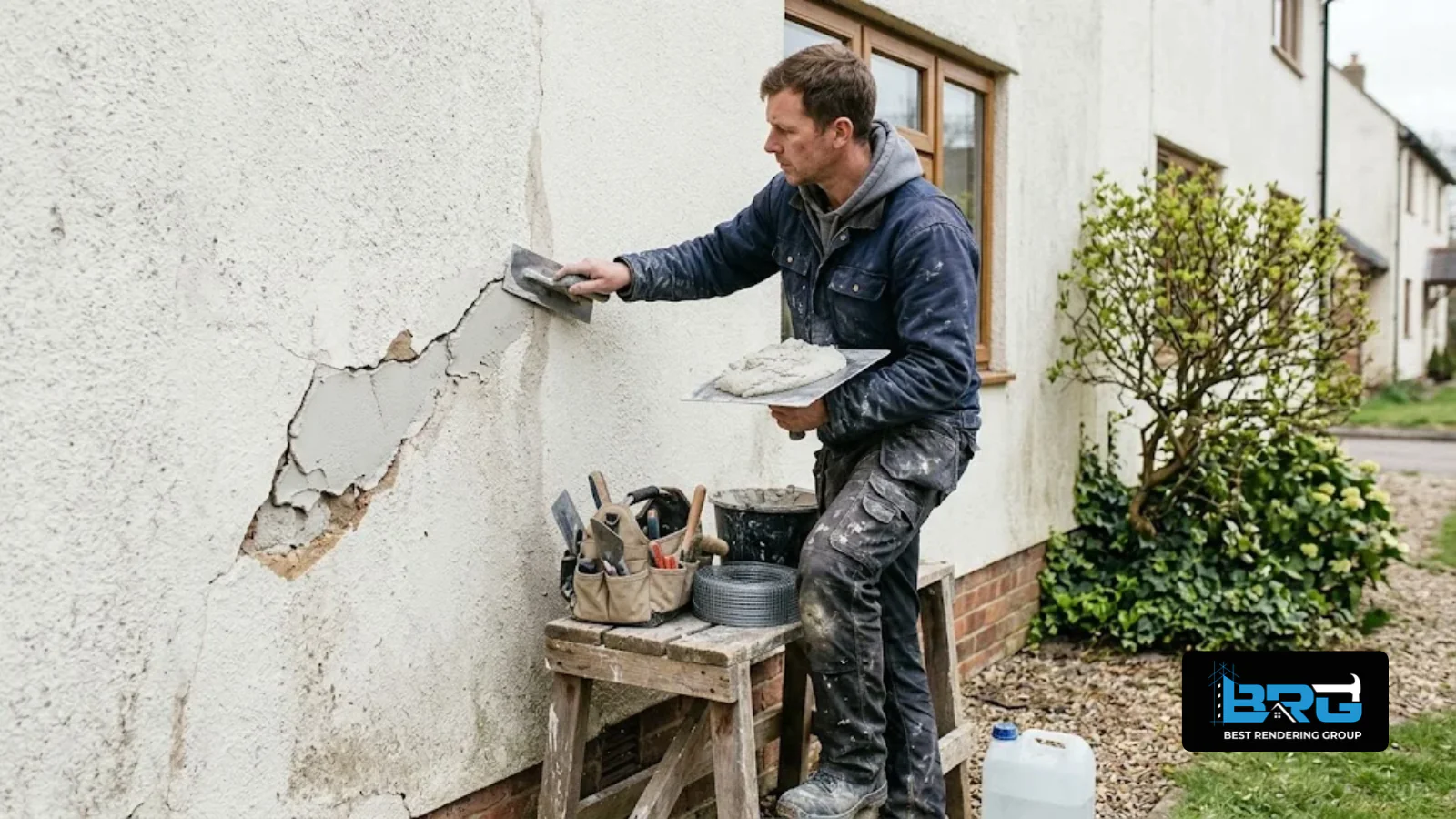
The priority is to determine whether the problem relates to roof drainage, flashing, plumbing, ground moisture, cracks or another source.
Where necessary, arrange for the relevant trade or qualified building professional to investigate and correct the underlying defect.
Once the water source has been addressed, the wall may need time to dry. The required period depends on the construction materials, the amount of moisture present, the weather and the proposed coating or repair system.
Do not assume that a wall is ready for repainting simply because the surface looks dry.
The surface should be checked for loose material, cracking, salt deposits, coating failure and other deterioration.
Sound render may be suitable for localised repair or refinishing. Where the material has detached or deteriorated extensively, more substantial repairs may be necessary.
The preparation method should suit the material and its condition. This may involve removing loose material, preparing the substrate, repairing damaged areas and allowing the repair products to cure as directed.
If the wall has persistent moisture or recurring damage, do not proceed with cosmetic repairs until the underlying cause has been addressed.
The final coating or render system should be appropriate for the substrate and its moisture conditions. The manufacturer's instructions should be followed for preparation, curing, application and drying.
Suitable exterior rendering systems can help achieve a durable, attractive wall finish when the substrate and site conditions are properly considered.
The important point is that rendering can restore a damaged finish, but it should not be used as a substitute for repairing an active leak or building defect.
Although not every moisture problem can be prevented through routine maintenance, several measures can reduce avoidable exposure and help you identify issues earlier.
Maintain gutters and downpipes. Arrange regular inspections and promptly repair leaks, blockages and damaged connections.
Keep surface water moving away from the house. Check for pooling beside walls and ensure that paving and drainage direct water away appropriately.
Monitor windows, doors and roof junctions. Have damaged flashing, failed joints and suspected water entry assessed and repaired.
Address cracks before they worsen. Monitor changes in the render and seek advice about recurring or widening cracks rather than repeatedly filling them without investigating the cause.
Avoid covering damp surfaces. Do not paint or apply new render over a wall that has not been assessed and prepared appropriately.
Keep useful maintenance records. Photographs taken over time can help show whether a damp patch is spreading, returning after rain or changing following repairs.
Choose appropriate materials and workmanship. Surface preparation, substrate compatibility, curing and moisture management all contribute to the performance of a rendered finish.
If the wall has already been damaged, the repair should address both the visible deterioration and the circumstances that caused it.
Moisture problems can affect rendered homes throughout Melbourne's south-eastern suburbs. The cause may vary from property to property, so a solution that works for one wall may not be suitable for another.
Best Rendering Group provides rendering services across Melbourne's south-east, including areas such as:
If you are looking for rendering services in your area, review the service locations to see whether your suburb is covered.
For examples of finished work, you can also explore examples of completed rendering work. These projects can help you understand the appearance of completed rendering, although the right repair or finish for a damp wall will depend on its individual condition.
Consider seeking professional advice if damp patches continue to return, spread across the wall or appear alongside cracking, peeling paint, loose render or white salt deposits.
An assessment is also worthwhile before repainting or applying a new render finish to a wall with a history of moisture problems.
A rendering professional can assess the visible surface and advise whether render repair or refinishing is appropriate. Where the likely source involves plumbing, roof drainage, flashing, waterproofing or another building component, the appropriate specialist should investigate that issue.
Do not assume that every damp patch requires the render to be replaced. In some cases, the render may remain sound after the moisture source is corrected. In others, the affected material may need repair or replacement.
The aim is to establish what has caused the dampness and then choose a repair that suits the condition of the wall.
If you are concerned about damp patches, damaged render or the condition of your home's exterior, you can request a rendering assessment from Best Rendering Group to discuss the visible issue and the most appropriate next step.
1. Why are there dark patches on my rendered exterior wall?+
Dark patches can be caused by moisture within the wall, water entering through a defect, leaking drainage components, plumbing issues or surface growth. Dirt and uneven weathering can also create similar marks. The pattern, location and relationship with rainfall can provide useful clues, but an assessment may be needed to confirm the cause.
2. Can rain cause damp patches on rendered walls?+
Yes. Rainwater may enter through cracks, defective flashing, damaged joints or poorly maintained roof drainage components. Porous materials can also absorb moisture during repeated wetting. If patches repeatedly appear or worsen after rainfall, inspect accessible drainage components and arrange further investigation if the source is unclear.
3. Should I repaint a rendered wall with damp patches?+
Not before investigating the cause. Paint may peel or blister if moisture remains within the substrate or continues to enter the wall. Address the moisture source, assess the condition of the render and follow the preparation and drying requirements of the selected coating system before repainting.
4. Does damp render always need to be replaced?+
No. The need for replacement depends on the extent of deterioration and the condition of the underlying substrate. Some walls may require only localised repairs once the moisture issue is resolved, while badly damaged or detached render may need more extensive work.
5. Why do damp patches return after render repairs?+
Damp patches may return if the original source of moisture has not been corrected, if the wall has not dried sufficiently or if the repair materials are unsuitable for the conditions. Recurring staining should prompt a review of the original diagnosis and the surrounding building details rather than another cosmetic repair alone.
6. Can white powder on render be related to dampness?+
Yes. White powder may be efflorescence, which forms when moisture carries dissolved mineral salts through masonry or cement-based materials. As the water evaporates, the salts remain on the surface. Efflorescence does not automatically mean that the wall has serious damage, but persistent deposits can indicate continuing moisture movement.
7. Who should inspect damp patches on exterior walls?+
The appropriate professional depends on the suspected cause. A rendering professional can assess visible render damage, while a licensed plumber may be required for suspected plumbing leaks. Roofing, drainage, waterproofing or building defects may need assessment by a qualified specialist in the relevant field.
8. Does Best Rendering Group service Cranbourne, Berwick, Pakenham and Frankston?+
Best Rendering Group provides rendering services across Melbourne's south-east, including Cranbourne, Berwick, Pakenham and Frankston. Check the website's service-area pages or contact the team to confirm coverage for your specific location and discuss the condition of your rendered walls.
Damp patches on rendered walls should not be treated as a purely cosmetic issue until the cause is understood. Leaking gutters, defective flashing, cracks, poor drainage, rising damp and plumbing leaks can all contribute to moisture problems, but each requires a different response.
Start by recording where the dampness appears, checking accessible drainage components and monitoring whether the marks change after rainfall. If the problem persists or the render begins to deteriorate, arrange an appropriate assessment before repainting or refinishing the surface.
For homeowners across Melbourne's south-east, identifying the moisture source first can help prevent repeated repairs and protect the appearance and performance of the exterior finish.
Concerned about damp patches on your rendered walls? Contact Best Rendering Group to discuss the visible damage and whether render repair or further investigation may be appropriate.