
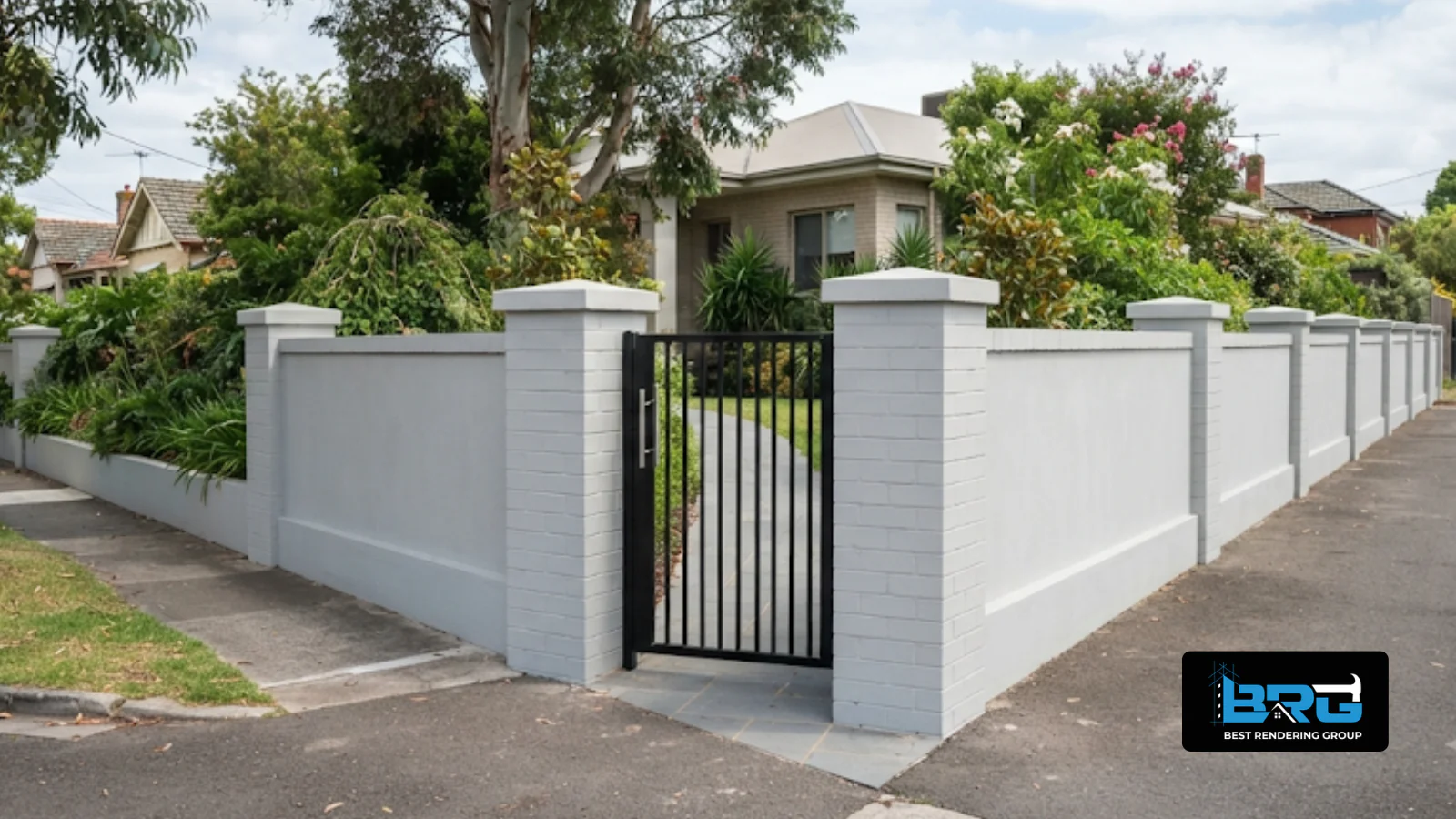
A front fence is one of the first things people notice when approaching a property. Even when the house itself has been renovated, an ageing brick boundary fence can make the entrance look unfinished.
For homeowners looking to update their property's street appeal, rendering may be an option worth considering. A suitable brick fence can be rendered to create a more consistent appearance, complement the house façade and give the front boundary a refreshed look.
However, rendering a fence is not quite the same as rendering the exterior walls of a house. Front fences often include exposed tops, piers, posts, gate openings and sections that are more directly exposed to rain and moisture. These details need to be considered before work begins.
So, can you render a brick fence?
Yes, suitable brick and masonry fences can generally be rendered, provided the structure and existing surfaces are appropriate for the selected system. The condition of the brickwork, mortar joints, moisture exposure and detailing all influence whether rendering is a suitable option.
In this guide, we'll explain what Melbourne homeowners should consider before rendering a front fence and how to plan a finish that works with the rest of the property.
Not every brick fence is automatically suitable for rendering.
The first step is to assess the existing fence and identify what it is made from. A conventional brick boundary wall may provide a suitable substrate for a compatible render system, but a fence containing different materials or deteriorating sections may require additional work.
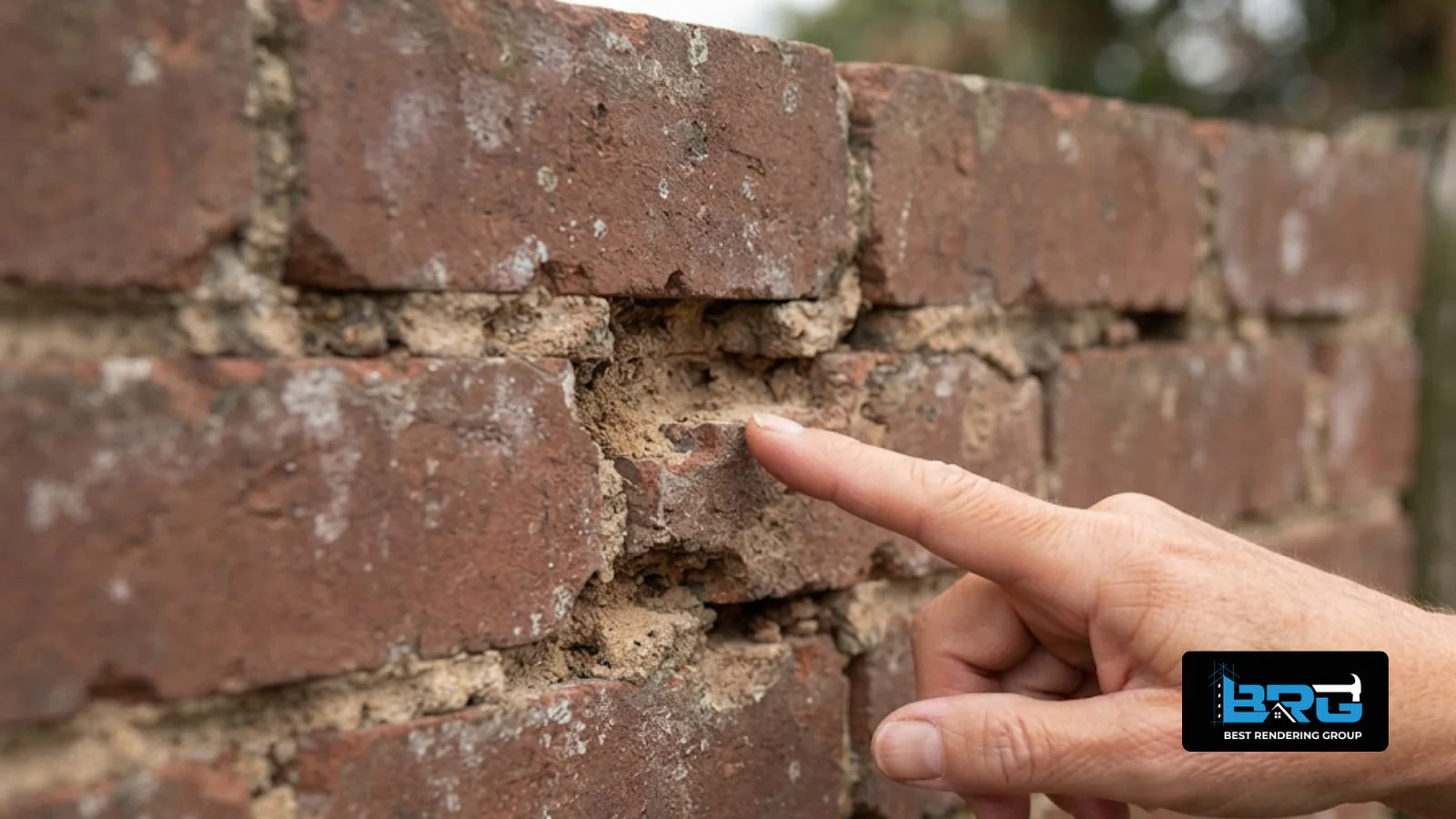
A contractor should check:
A fence that has leaning sections, significant cracking or loose masonry should not simply be covered with render. The underlying problem needs to be investigated first.
Traditional brick boundary fences are often considered for rendering because their masonry surfaces can provide a suitable substrate for an appropriate render system.
The brickwork still needs to be checked for condition, surface contamination, mortar deterioration and compatibility with the proposed product.
Concrete block fences may also be suitable for rendering, depending on the block type, surface condition and selected system.
Some concrete surfaces have different absorption and bonding characteristics from standard clay brickwork. Preparation and product selection should therefore follow the manufacturer's recommendations.
Some front fences combine brick piers, concrete panels, metal sections and other materials.
These require more careful planning because a render system intended for masonry cannot automatically be applied to every component. Transitions between different materials may also need suitable detailing to accommodate movement.
Both jobs involve applying a suitable finish to an exterior surface, but a fence has some different exposure and detailing requirements.
A house wall is usually part of a larger building envelope with designed roof overhangs, flashings, drainage details and other weather-management features.
A front fence may have exposed horizontal surfaces, freestanding piers and sections that receive direct rain from multiple directions.
The main differences include:
The most important difference is that the fence's exposed top and structural condition deserve particular attention. A good-looking surface finish will not compensate for poor water management or unstable masonry.
Preparation is one of the most important stages of a successful rendering job.
The existing surface needs to be properly prepared before rendering. Dust, loose mortar, deteriorated material and incompatible coatings can affect the bond between the render and the existing wall.
Before application, the contractor should inspect the fence and determine what preparation is necessary.
The condition of the masonry should be assessed along the full length of the fence.
Look for:
Minor surface defects may be repairable as part of the preparation process. More serious cracking or movement needs further investigation before rendering proceeds.
Dust, dirt, loose paint and other surface contaminants can interfere with adhesion.
The preparation method depends on the existing surface and the proposed render system. Loose material should be removed without damaging the sound masonry underneath.
Where an existing coating is present, its condition and compatibility need to be assessed rather than assuming that new render can simply be applied over it.
Older fences sometimes contain patched sections, different mortar mixes or repaired areas.
These sections may behave differently from the original brickwork. The contractor should consider the condition of each area and whether additional preparation or reinforcement is required.
Some substrates need a compatible primer, bonding agent or preparatory coat before rendering.
The correct product depends on the substrate and the rendering system. It is important to follow the manufacturer's technical instructions rather than use a general-purpose product without checking compatibility.
For further information about exterior wall preparation and finishes, see our professional exterior rendering services.
One of the most important details on a rendered front fence is the top edge.
Unlike many house walls, a freestanding fence may have a long horizontal surface exposed directly to rain. If water repeatedly enters the masonry from the top, it can contribute to staining, moisture problems and deterioration of the finish.
This is why fence caps and suitable capping details should be considered before rendering begins.
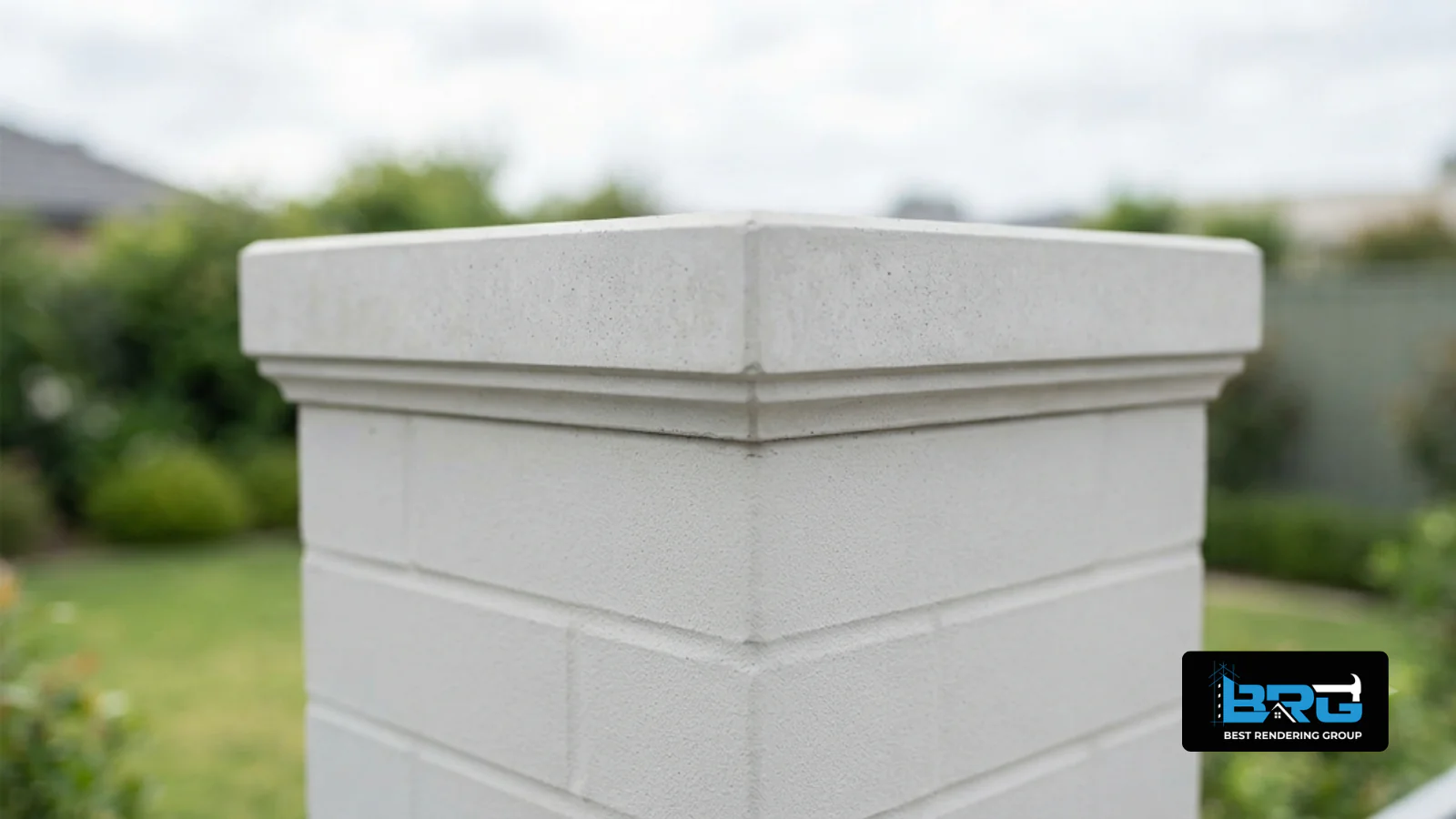
A fence cap is a protective finishing element installed along the top of a wall or fence.
Depending on the design, it may be made from concrete, stone, metal or another suitable material.
A properly detailed cap should help direct water away from the rendered face rather than allowing it to run back over the wall.
Before rendering, consider whether the existing cap:
A cap that allows water to run directly down the face may contribute to staining and premature deterioration.
The exposed horizontal top of a fence should not automatically be treated like a vertical wall.
A standard wall-rendering finish may not be suitable for an exposed horizontal surface. The top needs an appropriate capping or specialist weather-resistant detail designed for that exposure.
Where the existing cap is damaged or poorly detailed, it may be worth addressing it as part of the overall fence renovation.
Front fences are rarely just long, uninterrupted brick walls.
They often include piers, posts, gate openings, letterboxes and decorative features. These details have a significant effect on the finished appearance.
Piers are the raised sections that commonly support gates, rails or other fence elements.
When rendering piers, the contractor needs to consider their corners, proportions and top caps. Consistent thickness and neat edges help create a more balanced finish.
The areas around gate openings need careful attention.
The rendered edges should be neat and consistent, with enough clearance for the gate to operate correctly. The rendering work should not obstruct hinges, latches or other hardware.
Any movement or junction details should also be maintained rather than covered over.
If a letterbox is built into the fence, its position and opening need to be considered before work begins.
The render should finish neatly around the unit without blocking access, mail openings or drainage provisions.
Where the letterbox is being replaced, it is often easier to coordinate the new installation with the fence renovation rather than complete the render and modify the opening afterwards.
Some fences combine rendered masonry with metal railings or gates.
These materials need separate treatment. A masonry render system should not be applied to metal components unless the specified system is designed for that purpose.
It is also important to protect metalwork from render splashes and maintain the correct clearances around moving parts.
The best finish depends on the architectural style of the house, the fence design and the surrounding landscape.
A front fence does not need to look identical to the house façade, but the two should work together visually.
Here are some common options.
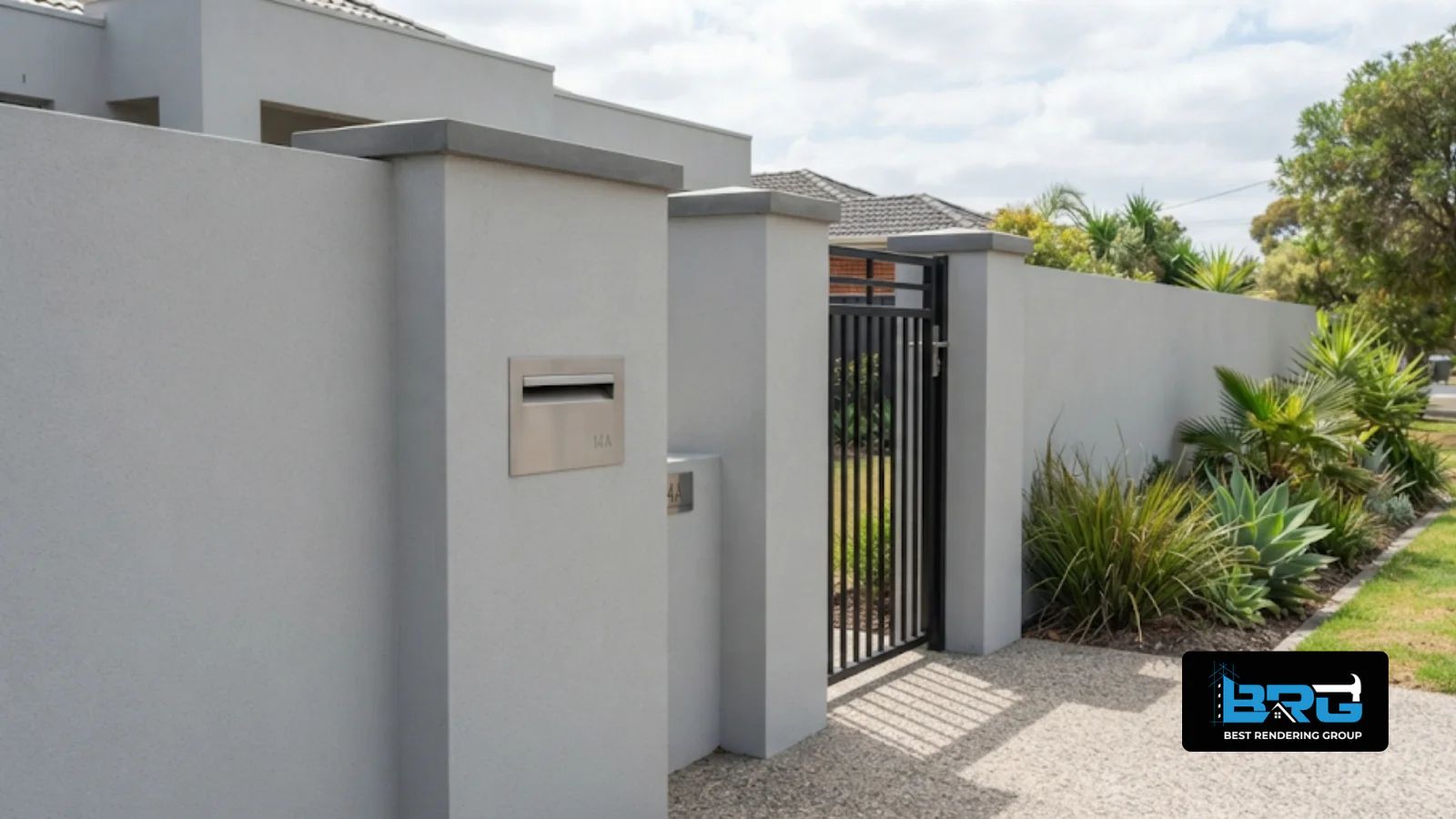
A smooth finish creates a clean, simple appearance and can suit contemporary homes.
It works particularly well where the fence has straight lines, simple piers and minimal decorative detailing.
However, smooth finishes can make surface imperfections more noticeable. Good preparation and consistent application are important.
A textured finish creates more visible surface variation.
It can suit traditional or contemporary properties depending on the texture selected. It may also help create a softer visual transition between the fence and the house.
The texture should be selected carefully so it complements the façade rather than competing with it.
Some render systems allow colour to be incorporated into the finishing coat.
This can provide a consistent appearance without relying on a separate paint finish, depending on the product selected.
The colour should be considered alongside the roof, garage door, windows, driveway and front landscaping.
For more ideas, explore our guide to choosing a suitable exterior render finish.
A front fence is part of the overall street-facing design.
Before settling on a colour, consider:
Our article on matching exterior render colours provides further guidance on selecting a finish for your property.
A rendered fence can look excellent when the background and details are handled properly. However, overlooking certain issues can affect the appearance and performance of the finish.
Loose bricks, deteriorated mortar and unstable sections should not be hidden beneath a new finish.
The masonry needs to be assessed and repaired where necessary before application.
A fence with an exposed or poorly detailed top can be repeatedly exposed to moisture.
The capping should be checked as part of the project, and the proposed finish should be suitable for the exposure conditions.
Where the existing fence has movement joints, these need to be properly accommodated in the render system.
Covering a joint with a continuous rigid finish can contribute to cracking when the masonry moves.
A fence may include brick, concrete, metal and other materials.
Each surface needs to be assessed separately. A product suitable for masonry may not be suitable for metal, timber or an existing coating.
The bottom of the fence can be exposed to soil, garden beds, paving and water splash.
The contractor should consider the existing damp-proofing and moisture-management details. Render should not bridge a damp-proof course or block drainage openings where these are present.
A fence can be technically well finished but still look out of place if its colour and texture do not complement the property.
It is worth considering the entire front elevation before choosing the final appearance.
This depends on the fence layout, property boundaries and the desired appearance.
Rendering both sides can create a more consistent finish, particularly where both sides are visible from different areas of the property.
However, it is important to establish who is responsible for the fence and whether the proposed work can be carried out on both sides.
Before arranging the work, consider:
If only the street-facing side is being rendered, the contractor should still assess the overall wall condition. Moisture or deterioration on the opposite face may affect the masonry.
Before requesting a quote, it helps to have a clear idea of what you want to achieve.
A few basic details can make the assessment more useful.
Decide whether the project includes the entire front boundary, only the street-facing side, individual piers or selected sections.
Look for visible cracks, loose bricks, deteriorated mortar, leaning sections and water stains.
These observations do not replace an inspection, but they help explain the work required.
Consider whether you prefer a smooth, textured or coloured finish.
If the fence is part of a larger renovation, it may help to choose the house façade finish first.
Identify whether the fence has existing caps, piers, letterboxes, gates or decorative features that need to be retained, replaced or updated.
A useful quote should explain:
This makes it easier to compare proposals and understand what is included.
Homes across Melbourne's south-east have a wide variety of front boundary designs, from traditional brick fences to newer masonry walls with contemporary gates and piers.
A suitable finish should complement the property's architecture and account for the condition and exposure of the existing fence.
Best Rendering Group provides exterior rendering services across Melbourne's south-eastern suburbs.
If you're planning a front fence renovation, you can explore our local service pages for:
You can also view our completed rendering projects to see examples of exterior finishing work.
A rendered brick fence can help create a more consistent and finished appearance at the front of your property.
The key is to look beyond the visible surface. The masonry needs to be sound, the proposed render system must suit the substrate, and details such as fence caps, piers, gates and moisture exposure should be considered before work begins.
If you're planning to update an existing brick boundary fence in Melbourne's south-east, speak with Best Rendering Group about your project.
Contact Best Rendering Group to discuss your fence rendering requirements.
1. Can you render an existing brick fence?+
Yes. An existing brick fence can often be rendered if the masonry is structurally sound and the surface is suitable for the selected system. The brickwork, mortar joints, moisture exposure and existing coatings should be assessed first.
2. Does a brick fence need to be cleaned before rendering?+
Yes. Dust, dirt, loose mortar and other contaminants can affect adhesion. The surface should be prepared according to the requirements of the chosen render product.
3. Should a brick fence have capping before rendering?+
An appropriate cap or capping detail is important because it helps protect the exposed top of the fence from water entry. The design should direct water away from the rendered faces and include suitable drip detailing where required.
4. Can you render both sides of a boundary fence?+
In many cases, both sides can be rendered if the surfaces are suitable and access and property-boundary arrangements allow it. The two faces should be assessed separately because their condition and exposure may differ.
5. Can you render a brick fence with metal railings?+
Yes, suitable masonry sections can be rendered while metal railings are retained. The metal components need separate treatment and should be protected during application. The render should not interfere with the operation or fixing of the railings.
6. Can you render fence piers and posts?+
Suitable masonry piers and posts can generally be rendered. Their corners, proportions, caps and connections to other materials need careful detailing to achieve a neat finish.
7. Will rendering stop a brick fence from leaking?+
Rendering should not be treated as a complete waterproofing solution. Water entry through the top, joints, cracks or other construction details needs to be addressed separately. Appropriate capping and moisture-management details remain important.
8. Can you paint a rendered brick fence?+
Yes, depending on the render system and its finishing requirements. Some systems require a separate compatible coating, while others can include a coloured finish. The manufacturer's instructions should be followed before painting.
9. Can a cracked brick fence be rendered?+
It depends on the cause and severity of the cracking. Minor surface defects may be repairable, but cracks caused by movement, unstable foundations or structural problems need to be investigated before rendering.
10. How do I get a quote for rendering a front fence?+
Provide the fence's approximate length and height, photos of both sides where possible, details of any visible damage and your preferred finish. An inspection may be required to confirm the substrate condition, preparation and scope of work.
A suitable render finish can give an existing brick boundary a cleaner appearance and help it complement the rest of your home.
Discuss your project with Best Rendering Group and find out whether your fence is suitable for rendering.