
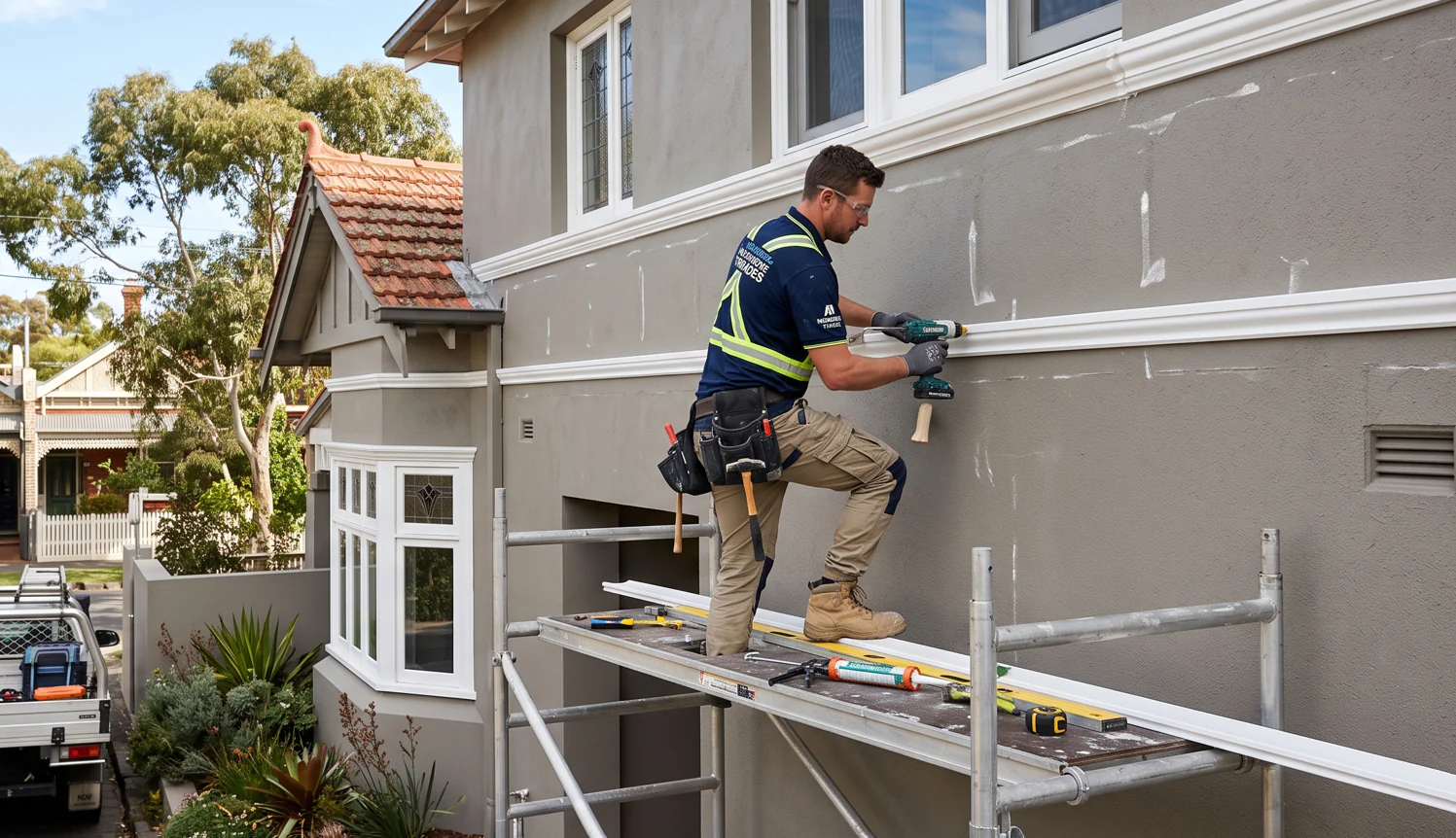
A plain, flat wall does its job, but it rarely looks finished. A wall moulding service is what closes that gap — adding raised lines, banding, or trim detail to a wall surface so it has depth and shadow instead of sitting as one uninterrupted flat plane. It's a small change that makes a noticeable difference, especially on rendered facades where the surface would otherwise look uniform from one end to the other.
This guide covers what wall moulding actually involves, where it gets used on Melbourne properties, and what to think about before adding it to a home or commercial facade. Best Rendering Group installs wall moulding across Melbourne's south eastern suburbs as part of broader rendering and finishing projects, and the detail below reflects how that work actually runs on site.
Wall moulding refers to applied trim or raised detail fixed directly onto a wall surface, most commonly on a rendered or masonry facade. Rather than the wall being one continuous flat surface, moulding breaks it into sections — a band running horizontally at window-sill height, a raised line framing an entrance, or trim that defines where one material or colour finishes and another begins.
It's a different job to cornice or skirting, which deal with internal joins between surfaces — those sit under the broader umbrella of moulding services generally. Wall moulding instead sits on the open face of a wall itself, usually outdoors, and its main purpose is shadow and definition rather than covering a structural join.
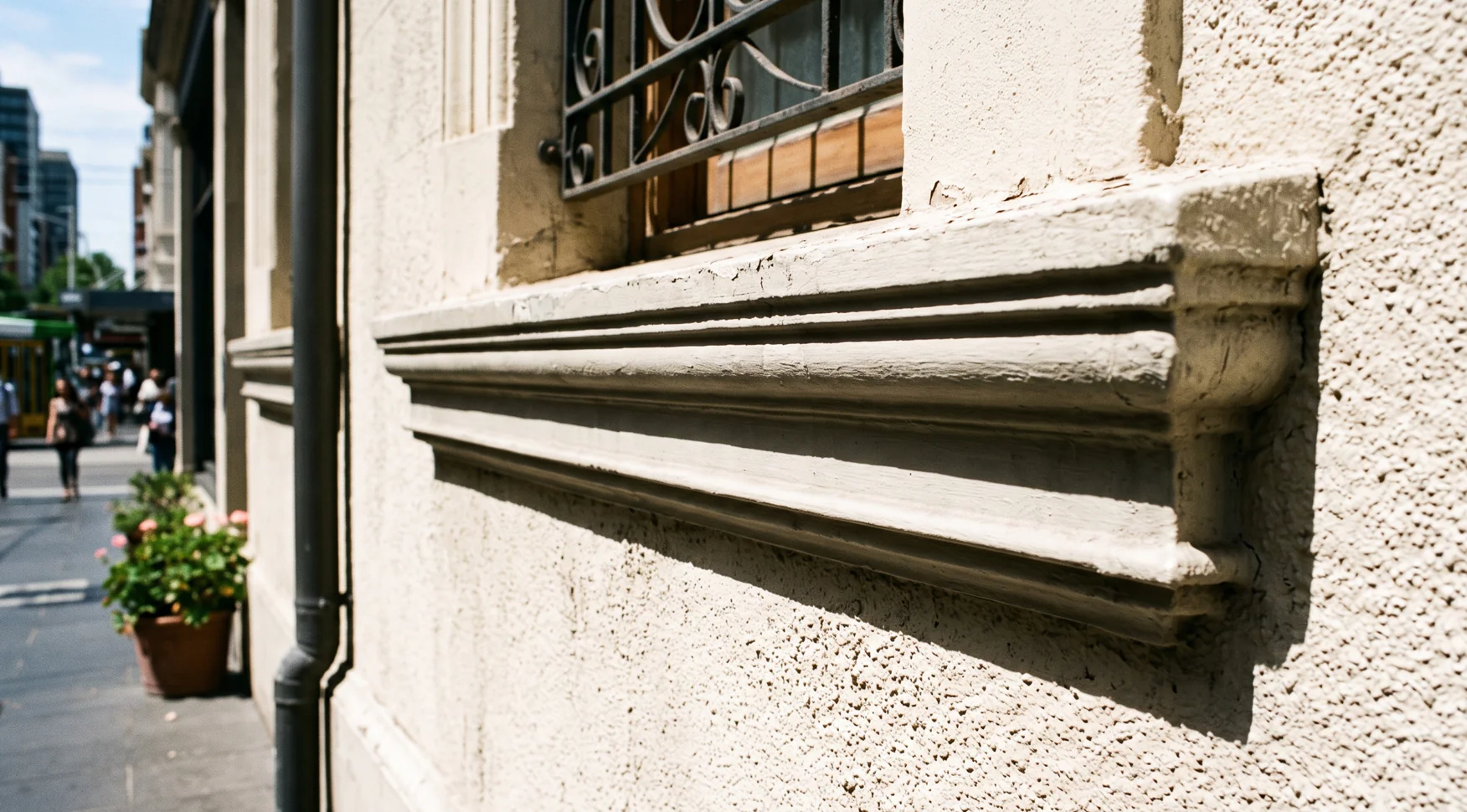
Wall moulding isn't a single fixed product — the term covers several different applications depending on what part of the wall is being treated and what the moulding needs to achieve.
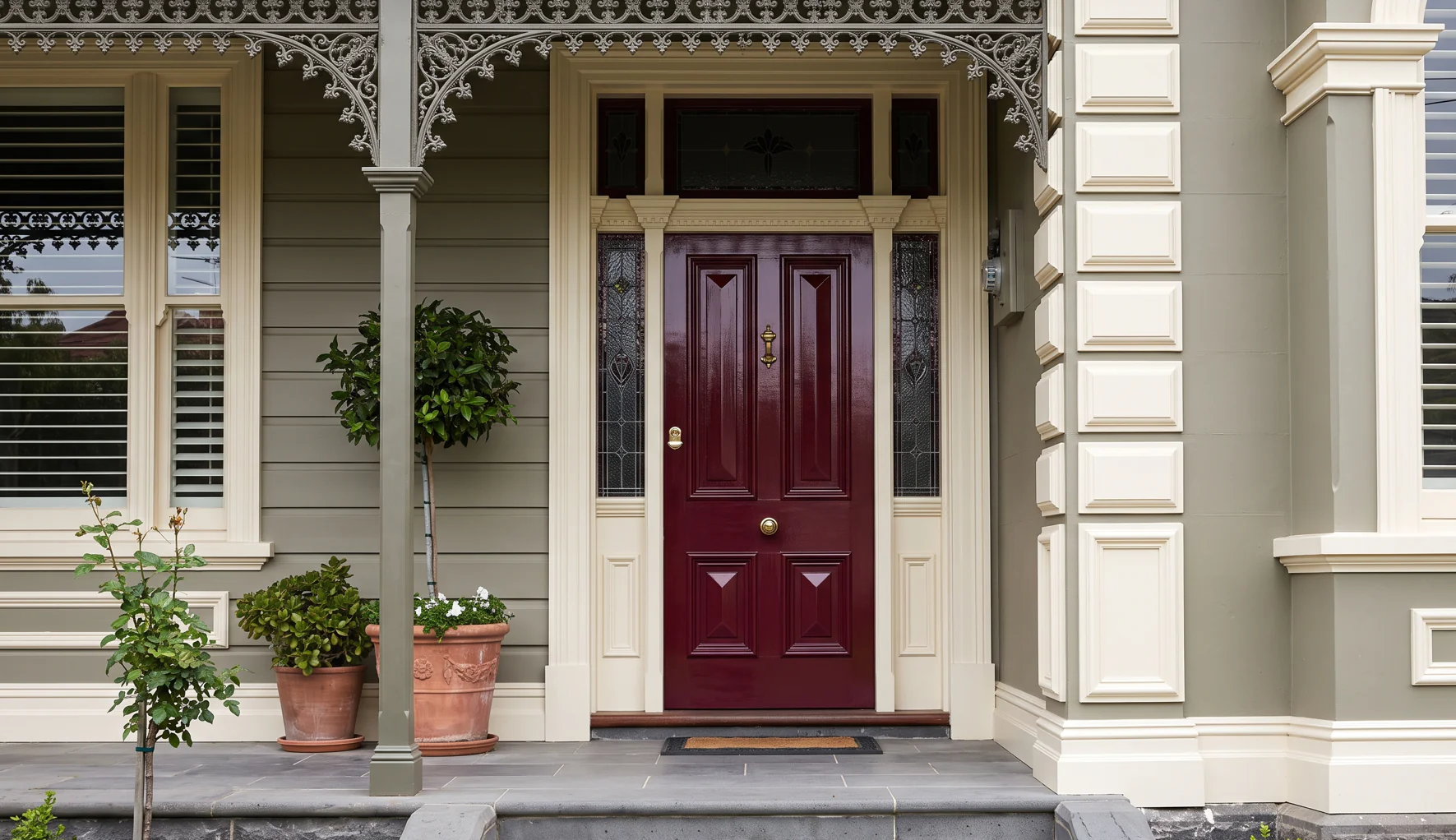
Raised trim framing a window or door is one of the most common uses. It draws the eye to the opening, adds a sense of proportion to the facade, and on older or heritage-style homes, often matches a detail that would traditionally have been part of the original construction.
A string course is a horizontal band running across a facade, often at a level that aligns with a floor line on a two-storey home. It breaks up height, adds a clear visual division between storeys, and gives an otherwise tall, flat wall a sense of proportion.
Moulding can also be used to frame a recessed or raised panel section on a wall — a deliberate rectangle or shape that adds texture to an entranceway or a feature section of a facade, often paired with a contrasting paint or render colour to make the shape stand out further.
Sometimes the goal isn't an obvious decorative shape at all, just a subtle line that catches light differently to the rest of the wall. This kind of detailing is common on modern renders, where the brief is "add interest" without making the facade look heavily ornamented.
The reasons people choose to add wall moulding tend to fall into a few consistent categories, whether it's a single home or a commercial building.
Turning one uniform wall surface into something with visible depth and shadow.
Restoring or replicating a detail that period-style homes traditionally included.
Drawing attention to an entrance, window, or feature section deliberately.
Adding a finishing touch that makes a property stand out without a full renovation.
Cost depends on the complexity of the design, the length of trim involved, and whether it's a single feature or a full facade treatment. These figures are a general guide for Melbourne properties.
Wall moulding sitting on an exterior facade in Melbourne deals with a lot more than moulding inside a room ever has to. Sun exposure, wind-driven rain, and the temperature swings that come with four seasons in a day all put pressure on any trim fixed to the outside of a building. If the wrong material or fixing method is used, moulding can lift, crack, or start separating from the wall within a year or two.
This is why wall moulding is usually planned alongside the render or facade finish itself, rather than added afterward as an unrelated extra. Getting the substrate, adhesive, and weatherproofing right at the same time as the moulding goes on makes a real difference to how long it actually lasts on a property in Frankston, Berwick, or anywhere else exposed to the weather Melbourne throws around.
Wall moulding is a visible, permanent addition to a facade, so it's worth getting these points confirmed before any work starts.
The process for exterior wall moulding follows a consistent order, regardless of whether it's a single feature or a full facade treatment.
How much does a wall moulding service cost in Melbourne?+
A single window or door surround typically costs $200 to $600, while string course banding is usually priced per linear metre at $40 to $90 depending on the profile. A full facade treatment can run from $2,500 up to $8,000 or more depending on the size of the property and the complexity of the design.
Is wall moulding only used on the outside of a property?+
It's most commonly used on exterior facades, but the same idea of raised trim or banding can be applied internally as a feature detail too. The materials and fixing method differ significantly between interior and exterior applications because of weather exposure.
Will wall moulding crack or come loose over time?+
It can, if the wrong materials or fixing method are used for an exterior application. Choosing weather-rated products and properly sealing joins against moisture significantly reduces the risk of cracking or detachment over time.
Can wall moulding be added to an existing render without redoing the whole facade?+
In many cases, yes, provided the existing render is in solid condition and the surface is properly prepared before the moulding is fixed. If the existing render is failing in places, those issues usually need addressing first.
How long does a wall moulding installation take?+
A single feature, like a window surround or a short section of banding, can often be completed in a day. A full facade treatment takes longer, generally a few days depending on the design and how much of the property is being covered.
A wall moulding service is one of the more cost-effective ways to change how a property presents from the street, without committing to a full renovation. Whether it's a simple window surround, a string course breaking up a two-storey facade, or a full feature treatment, the result comes down to design proportion, material choice, and how well the installation is coordinated with the rest of the facade finish.
Best Rendering Group installs wall moulding as part of rendering and facade projects across Cranbourne, Pakenham, and the wider south eastern suburbs, working directly with homeowners and builders to make sure the detail suits the property rather than looking bolted on. The same attention to surface preparation that goes into plastering work applies here too — moulding only holds up long-term if the wall underneath it was properly prepared first. If you're considering wall moulding for an upcoming render job or a standalone facade upgrade, getting the design and the render planned together is the right place to start.