
Exterior House Rendering in Keysborough: Wall Repair & Re-Rendering Project
Best Rendering Group recently completed an exterior house rendering project in Keysborough. Our team repaired damaged walls on a mid-century home and finished them with a clean, durable light grey render. This page covers the starting condition, the preparation, the materials and the final result, so you know what to expect if you're planning wall repairs or re-rendering in Melbourne's south-east.
Project at a Glance
| Location | Elmbank Drive, Keysborough VIC 3173 |
|---|---|
| Property type | Single-storey residential home |
| Services | Wall repair, surface preparation and exterior rendering |
| Finish | Fine-textured light grey render |
| Detail areas | Windows, awnings, downpipes, vents, pergola and rooflines |
| Contractor | Best Rendering Group |
Project Overview: Restoring a Mid-Century Home in Keysborough
Keysborough has many well-built mid-century homes that have handled decades of Melbourne weather. Over time, however, their walls start to show it. Hairline cracks appear, old coatings fail in patches, and the home begins to look tired next to its neighbours.
This home on Elmbank Drive was a good example. The owners wanted to restore and protect their exterior walls rather than simply paint over the problems. Our team repaired the damaged sections, prepared every wall and applied a consistent render finish around the whole house.
The result is a modern light grey exterior that suits the home's original architecture. It also gives the walls a protective layer that can cope with Melbourne's changeable climate for years to come.
Wall Repairs Before Rendering: Why Preparation Matters
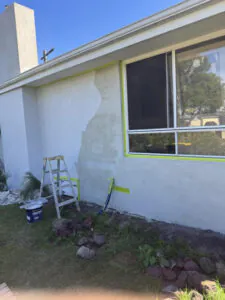
One of the project photos shows the front wall midway through repair, with a freshly patched section beside the existing surface. This stage matters most, yet homeowners rarely see it once the job is finished.
Rendering over unsound walls doesn't work. If loose, flaking or cracked material stays on the wall, the new finish will eventually fail along the same lines. Before applying any new material, our team:
- Inspected every wall for cracks, hollow-sounding areas and loose material
- Removed failed and unstable sections back to a solid base
- Repaired the damaged areas so the surface was sound and even
- Cleaned the walls to remove dust, dirt and loose particles that weaken adhesion
- Checked the junctions where walls meet windows, downpipes, vents and eaves because problems often start there
Each step affects how long the finished wall lasts. Skipping any of them is how a "quick refresh" becomes a repair bill two years later. Our plastering services and rendering services work hand in hand on repairs like this.
Choosing the Right Render: Cement vs Acrylic
Rendering isn't a single product. The right system depends on the wall substrate, the condition of the surface, the climate and the look the owner wants. Across Melbourne's south-east, we mainly work with two systems.
Cement Render
Cement render is a traditional, hard-wearing system made from cement, sand and additives. It suits brick and masonry walls and copes well with Melbourne's seasonal temperature swings. It also accepts a range of textures, from smooth to sand-finish.
Acrylic Render
Acrylic render is a flexible coating with colour incorporated into the product. Because it flexes slightly, it handles minor wall movement well, and it holds its colour under strong UV exposure. It can be applied over a suitable, properly prepared base.
The Finish on This Project
The finished walls have a fine, even texture in a soft light grey, a popular choice for modern renovations. It looks contemporary without detracting from the home's original character.
Light grey also suits the rest of the property. It pairs well with the white fascia and gutters. It also complements the dark charcoal pergola and the aluminium window frames and awnings.
Masking and Site Protection
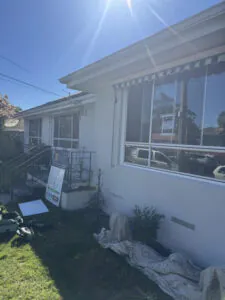
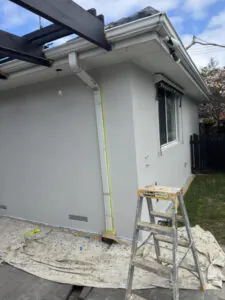
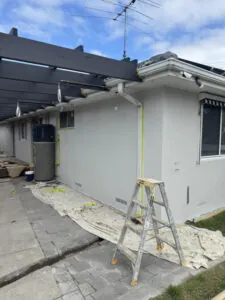
The photos show green masking tape along window frames, downpipes and trim, plus drop sheets over paving and garden edges. This part of the job is easy to overlook, but it can be the difference between a tidy finish and a messy one.
On this project, our team:
- Masked all windows and frames to keep render off the aluminium and glass
- Taped around downpipes and fixtures to achieve crisp, clean edges
- Laid drop sheets over paving, the pergola area and garden edges
- Protected plants and rockery beds along the walls
- Kept ladders, tools and materials organised so the site stayed safe
Rendering is messy by nature, so protecting the property takes planning. A clean site and sharp edges say a lot about how a contractor works.
Detail Work That Makes the Difference
Every home has features that need careful handling. On this Keysborough property, we worked around the following.
Windows and awnings. The large aluminium-framed windows and striped awnings required plenty of cutting-in. Clean, consistent edges around the frames keep the render neat and help direct water away from the junctions.
Downpipes and guttering. We masked the downpipes and finished the render tightly against them. A clean join stops gaps where water could get behind the wall.
Subfloor vents. These must stay open and unobstructed because they keep air moving under the house and help manage moisture. We rendered neatly around them without blocking airflow.
Hot water unit and wall fixtures. The heat-pump unit and fixtures at the rear needed clean cut-ins so the finish stayed consistent across every wall.
Pergola and eaves. Dark timber against light render shows every imperfection, so the roofline edge has to be right.
Garden beds. Garden beds sit right against the walls on several sides. Keeping render clear of soil and plants, and finishing neatly at the base, protects both the wall and the garden.
Why Exterior Rendering Suits Keysborough Homes
Keysborough sits in Melbourne's south-east, and many of its homes were built in the mid-20th century. Quality rendering makes sense here for several reasons.
Weather exposure. Melbourne can deliver hot, UV-heavy summers, cold wet winters, strong winds and sudden temperature drops in a single day. Walls expand, contract and absorb moisture throughout these conditions. A quality render system gives them a protective outer layer.
Ground movement. Some areas of Melbourne's south-east have reactive clay soils, which swell when wet and shrink when dry. Over time, this movement can cause hairline cracking in masonry walls. Thorough preparation and a well-applied finish help manage minor movement.
Ageing wall surfaces. Old paint, previous coatings and weathered surfaces often need proper repair before anything new goes on. Rendering gives a fresh, uniform surface across the whole house.
Street appeal and value. A clean exterior lifts the entire property. Whether you plan to sell or simply want to enjoy your home more, rendering is one of the most visible upgrades available.
Inland vs coastal homes. Keysborough sits well back from the bay, so salt air isn't the main concern.
For homes closer to the bay, the considerations change. Salt and onshore wind are tough on exterior finishes. That is why we often recommend acrylic systems for rendering and plastering in Frankston. Wherever the home is, we match the system to the location.
Our Exterior Rendering Process
- Assessment. We inspect the property and check the condition of each wall. We look for cracks, failed coatings and problem areas near openings.
- Repairs and preparation. We repair damaged and unsound sections, then clean and prepare the surfaces for the new system.
- Masking and protection. Before we apply any material, we mask and cover windows, downpipes, fixtures, paving and gardens.
- Render application. We apply the render wall by wall, so the finish stays even and consistent, with no visible joins or patchy sections.
- Finishing. We finish the surface to a fine, uniform texture, with extra attention to corners, window returns and the roofline.
- Clean-up and handover. We remove the masking, collect the drop sheets and clean the site. Then we walk through the finished work with the homeowner.
The Finished Result
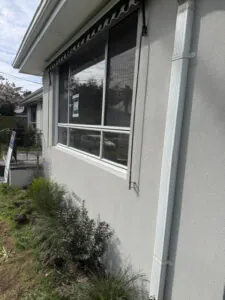
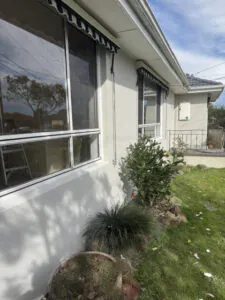
The final photos show a home that looks fresh, clean and cared for. The soft grey render runs consistently across the front, side and rear walls. Edges around the windows are sharp, the downpipes are tidy and the roofline transitions neatly.
Highlights of the finished project:
- A uniform, fine-textured light grey finish on every wall face
- Repaired, stabilised walls instead of a cosmetic cover-up
- Clean lines around windows, awnings, downpipes and vents
- A modern look that respects the home's original character
- A durable protective layer against Melbourne's weather
- Tidy gardens and paving after the work
How to Look After Rendered Walls
Rendered walls need little maintenance, but a few habits help them last:
- Wash gently with water and a soft brush once or twice a year to remove dirt and mould
- Avoid high-pressure cleaning close to the wall, as it can damage the surface
- Trim back plants so soil and foliage don't stay in contact with the render
- Check for cracks after very wet or very dry periods and repair small ones early
- Keep gutters and downpipes clear to prevent overflow and staining
- Call your renderer if you notice cracking, bubbling or moisture marks
Frequently Asked Questions
How long does an exterior rendering job take?
The timeline depends on the wall condition, the system used, the amount of repair work and the weather. We give you a clear timeline with your quote.
Can you render over old paint?
Sometimes, but it depends on the condition of the surface. We inspect the walls first. If the existing coating is loose or failing, we remove or treat it so the new render bonds properly.
What is the difference between cement and acrylic render?
Cement render is a hard, traditional system suited to masonry. Acrylic render is a flexible, pre-coloured finish that handles minor movement well. We recommend the right one for your walls and goals.
Will rendering fix cracks in my walls?
Not on its own. We repair cracks first, and once they are properly repaired, render can cover and protect hairline cracks. Larger or recurring cracks may point to movement or moisture, so we assess them before applying any finish.
Do I need to be home during the work?
No. We protect your property, keep the site tidy and are happy to talk through progress whenever you like.
Can you render around windows, awnings and downpipes?
Yes. Detail work around fixtures is part of every job. We mask and cut in carefully so edges stay sharp.
Which areas do you service?
We work across Melbourne's south-eastern suburbs, including Keysborough, Frankston and Cranbourne. See the full list on our Areas We Serve page.
Get a Free Quote for Rendering in Melbourne's South-East
If your walls are cracked, patchy or simply tired, Best Rendering Group can help. Beyond rendering, we offer plastering, Hebel installation, moulding, concrete finishing and foam installation. You can also learn more about our team.
Every job starts with an honest inspection and a clear quote. We'll tell you what your walls need, which system suits them and what to expect from start to finish.
Call Best Rendering Group on 0401 341 124 or send an enquiry through our website.