

Most people only think about their walls when something is already wrong with them. A crack that keeps coming back. A patch that never quite matches. Paint that bubbles no matter how many times you redo it. By the time Plastering Services in Melbourne cross your mind, it's usually because something underneath has been ignored for a while.
That's not a criticism — it's just how walls work. They're the part of a house nobody looks at twice until they have to. This piece walks through what goes into a proper plastering job, why so many fall short, and where Best Rendering Group draws the line between a wall that lasts and one that needs redoing in two years.
There's a habit a lot of homeowners fall into — calling a plasterer only when there's visible damage. A hole from moving furniture. A crack above a doorway. Water staining from an old leak. The job gets treated as a repair, full stop.
In reality, plastering is the layer everything else depends on. Paint sits on top of it. Wallpaper relies on it being flat. Even rendering on the outside of a home needs a properly prepared surface underneath. Rush the plaster, or work on a wall that wasn't checked properly first, and every finish that follows inherits the problem.
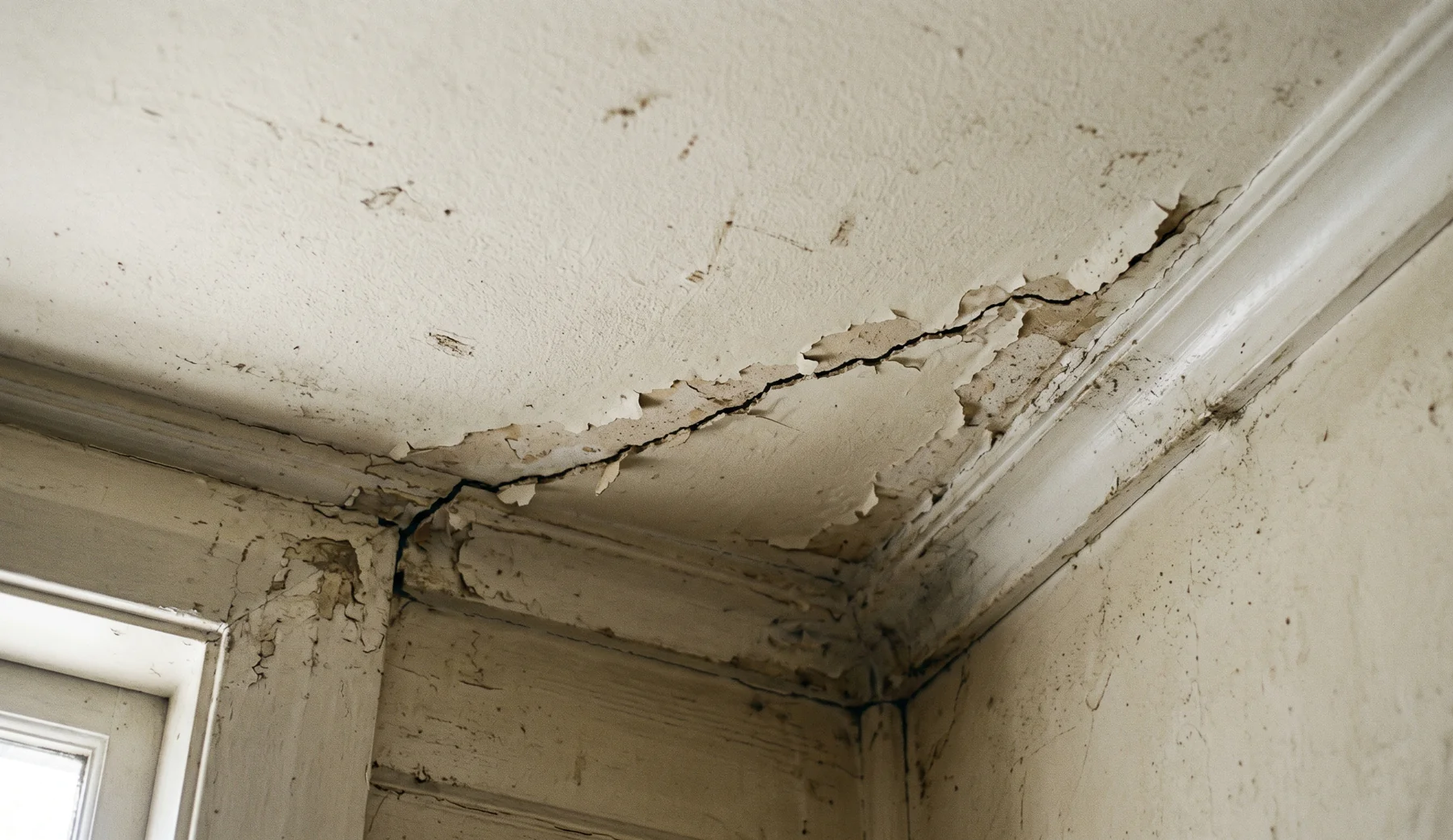
Strip away the sales talk and a good plastering job comes down to a handful of things that either happen or don't. Here's what Best Rendering Group checks for on every property before calling a job finished.
No hollow patches, no old loose material left behind. New plaster only ever performs as well as what it's bonded to.
Moisture trapped behind a wall will push through a new finish eventually. It has to be dealt with first, not covered over.
This is where real flatness gets built. A rushed base coat means every later layer is fighting an uneven start.
Painting too early on plaster that hasn't fully dried is one of the most common reasons finishes fail within a year.
A house and an office fit-out might both need plastering, but the priorities shift depending on what the space is used for. A home renovation is usually about getting a clean, comfortable finish that suits how a family lives day to day, with more flexibility on timing.
Commercial spaces are a different conversation entirely — offices, retail fit-outs, larger developments — where deadlines are usually tied to a lease or opening date. The plastering itself doesn't change dramatically, but the pace and the margin for error does.
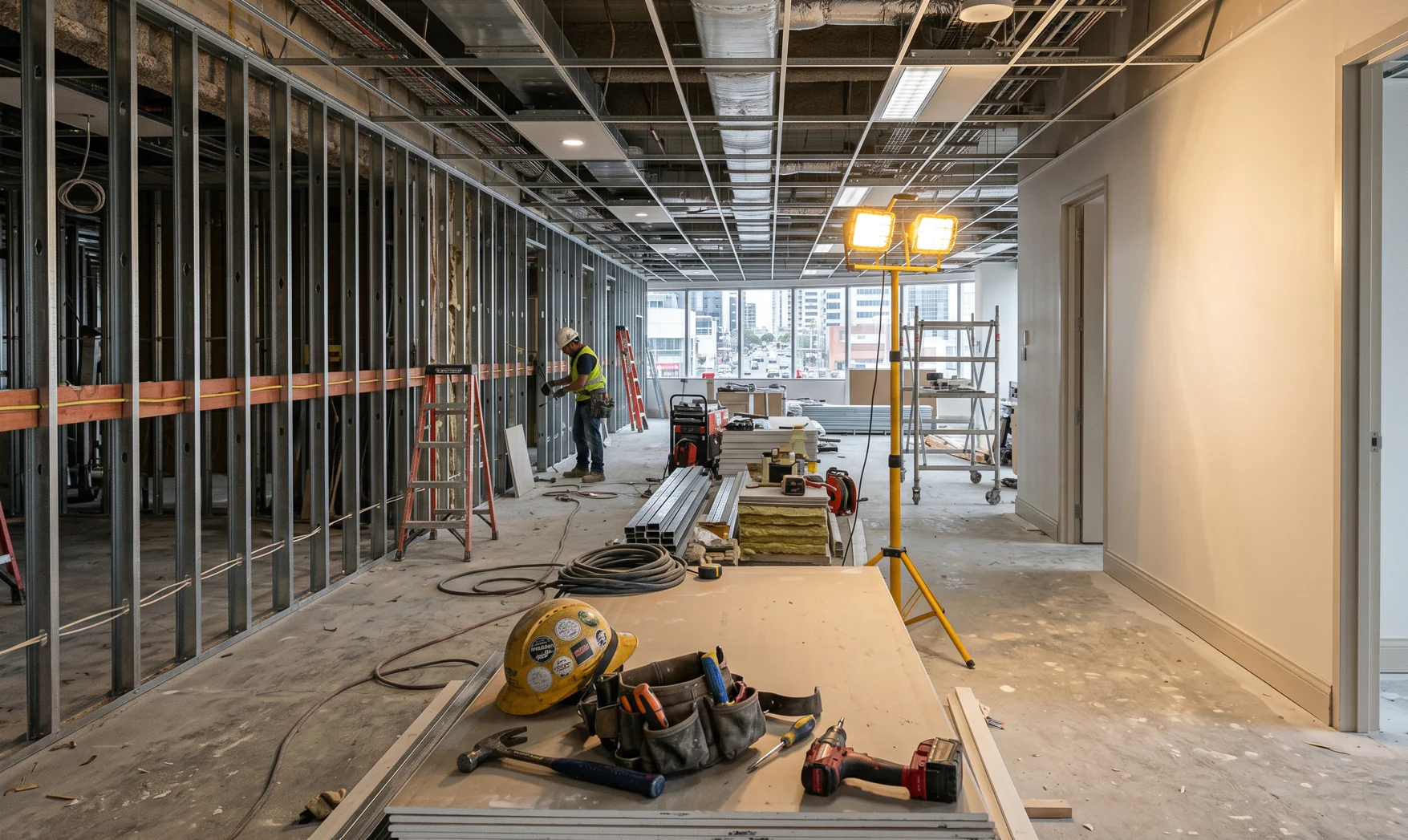
The trade is the same, but what each setting demands of it isn't. Here's a rough comparison of how a residential plastering job typically runs against a commercial one.
| Factor | Residential | Commercial |
|---|---|---|
| Typical timeline | Flexible, often weeks | Fixed, tied to lease or opening date |
| Main priority | Finish quality and liveability | Speed without sacrificing finish |
| Working hours | Standard daytime access | Often after-hours or staged around trade access |
| Surface scale | Smaller, room-by-room | Larger continuous runs, more crew coordination |
| Common pressure point | Matching existing finishes | Curing time clashing with handover dates |
Swipe sideways to see the full table.
Here's something most people don't realise until they've lived with a bad plastering job for a while — a wall can look fine in daylight and still be uneven enough to bother you the moment the lights go on at night. Shadows fall differently across a lumpy surface, and paint sheen highlights every dip and ridge that natural light might have hidden.
A properly plastered wall is flat. Genuinely flat, not "flat enough that you won't notice unless you're looking for it." That consistency is the actual product you're paying for, which is why Best Rendering Group treats the finish coat as the step that defines the whole job, not just the last box to tick.
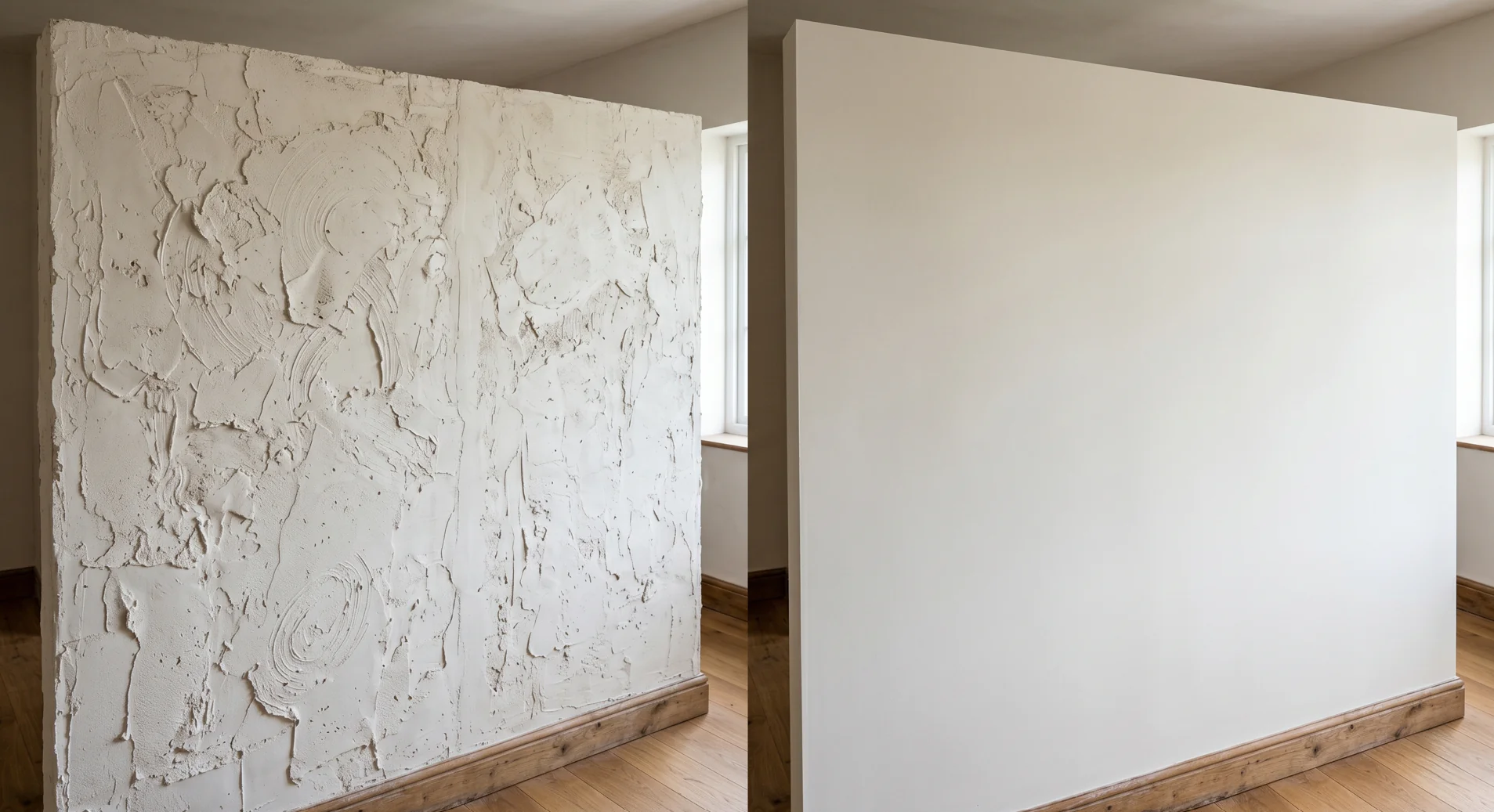
If you're getting quotes and want to know whether someone is going to do this properly, it helps to know what the right order of operations looks like.
None of these steps are complicated on their own. The issue is when one gets skipped to save time, and it usually doesn't show up until weeks or months later — which is exactly why it's tempting to cut corners in the first place.
Most people choosing a plasterer end up comparing quotes side by side and picking on price alone. That's understandable, but price tells you almost nothing about how the job will actually go. These are worth checking first.
Plastering isn't a glamorous part of any renovation or build, and it's easy to treat it as something to get through quickly so you can move on to paint colours and furniture. But it's the layer everything else sits on, quite literally. Getting it right the first time costs less in the long run than patching up a rushed job two or three years from now.
If you're in Melbourne's south eastern suburbs and want a straightforward look at what a job on your property would actually involve, Best Rendering Group is happy to come have a look and talk it through honestly — whether that's plastering on its own or alongside concrete finishing or Hebel installation elsewhere on the property.