
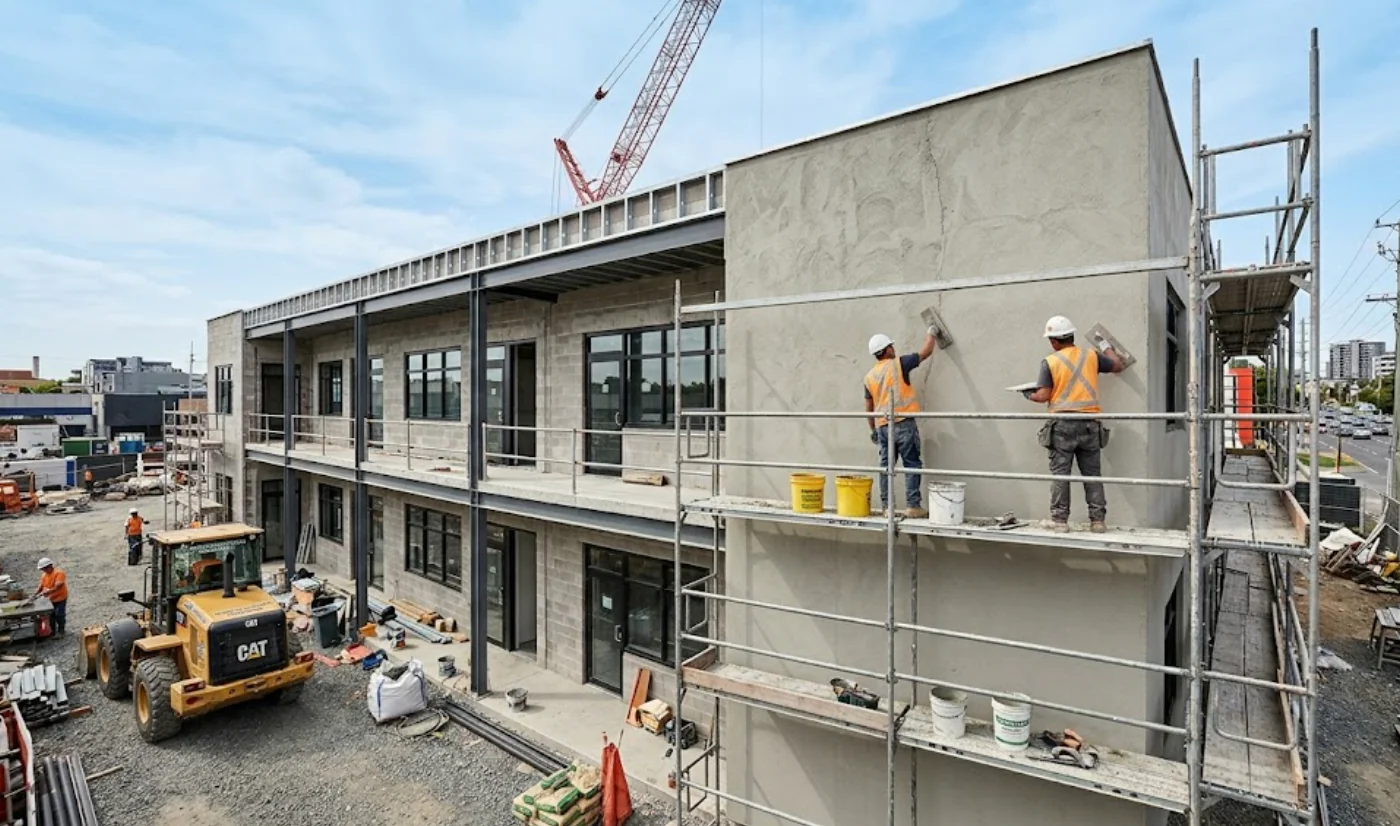
Best Rendering Group handles commercial rendering Melbourne projects that don't run on the same clock as a home renovation. There's a handover date, a builder waiting on the next trade, and usually a compliance checklist sitting somewhere in a project folder. Get the render wrong, or get it done late, and the cost isn't just a redo — it's a delay that ripples through everyone else's schedule too.
This is the part residential rendering doesn't really prepare you for. The material choices are similar in some ways, but the pressure, the scale, and the margin for error are not. Here's what actually matters when rendering is part of a commercial build in Melbourne's south eastern suburbs.
It's tempting to think of commercial rendering as residential work scaled up — more square metres, more scaffolding, same process. That's not really how it works on site.
A commercial building usually has multiple trades moving through at once, a builder coordinating the sequence, and a deadline tied to a lease start date or council sign-off. Rendering has to fit into that sequence without holding anything up, which means the planning conversation happens well before anyone touches a wall. The same principle applies to plastering services on commercial interiors — scope and scheduling are set early or the whole program pays for it later.
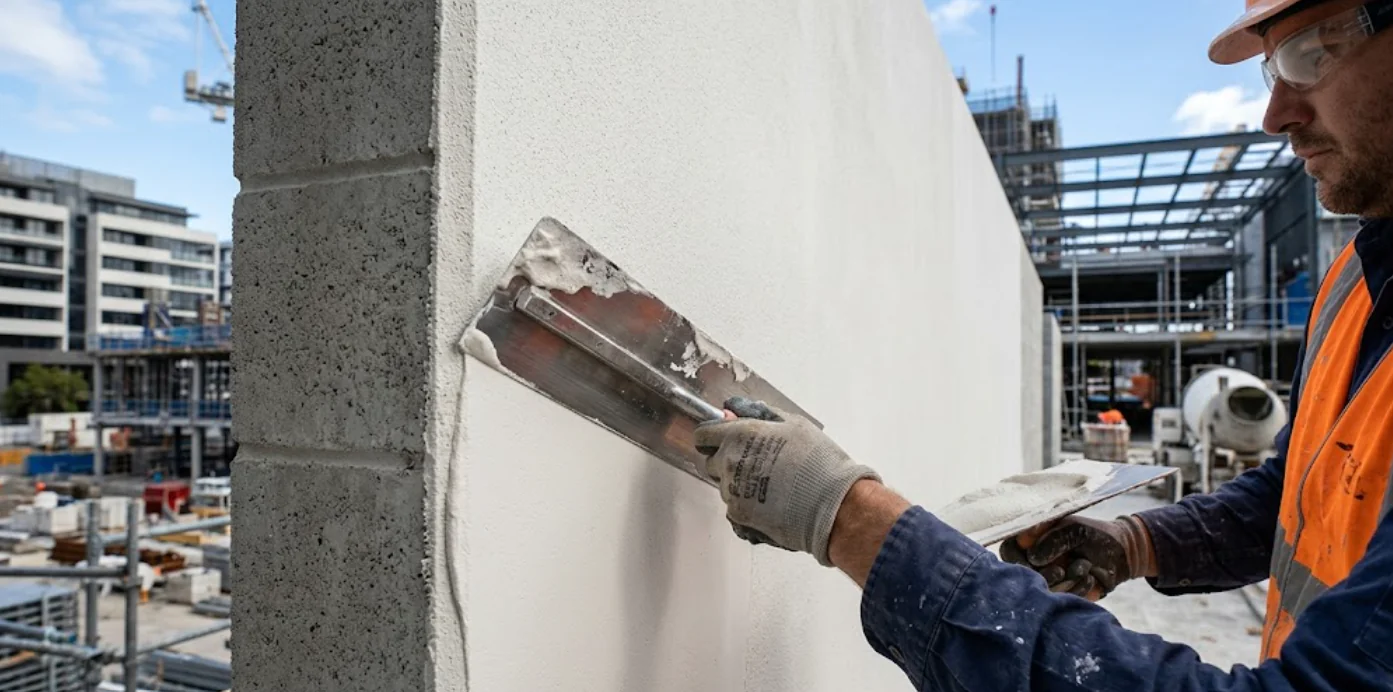
Builders and developers tend to ask the same question early on — what's actually going on the wall? On commercial jobs, the answer is usually one of a handful of systems, each chosen for a specific reason rather than just appearance.
Hebel installation comes up often because the panels are lightweight and consistent, which matters when a building has multiple identical units. Stone veneer systems get used where thermal performance and fire resistance need to tick a box on a compliance document. Loxo panel cladding is worth considering on jobs where insulation and a long warranty period matter more than upfront cost. Acrylic render still gets used plenty too, particularly where the brief is a clean, modern look without the bulk of a panel system.
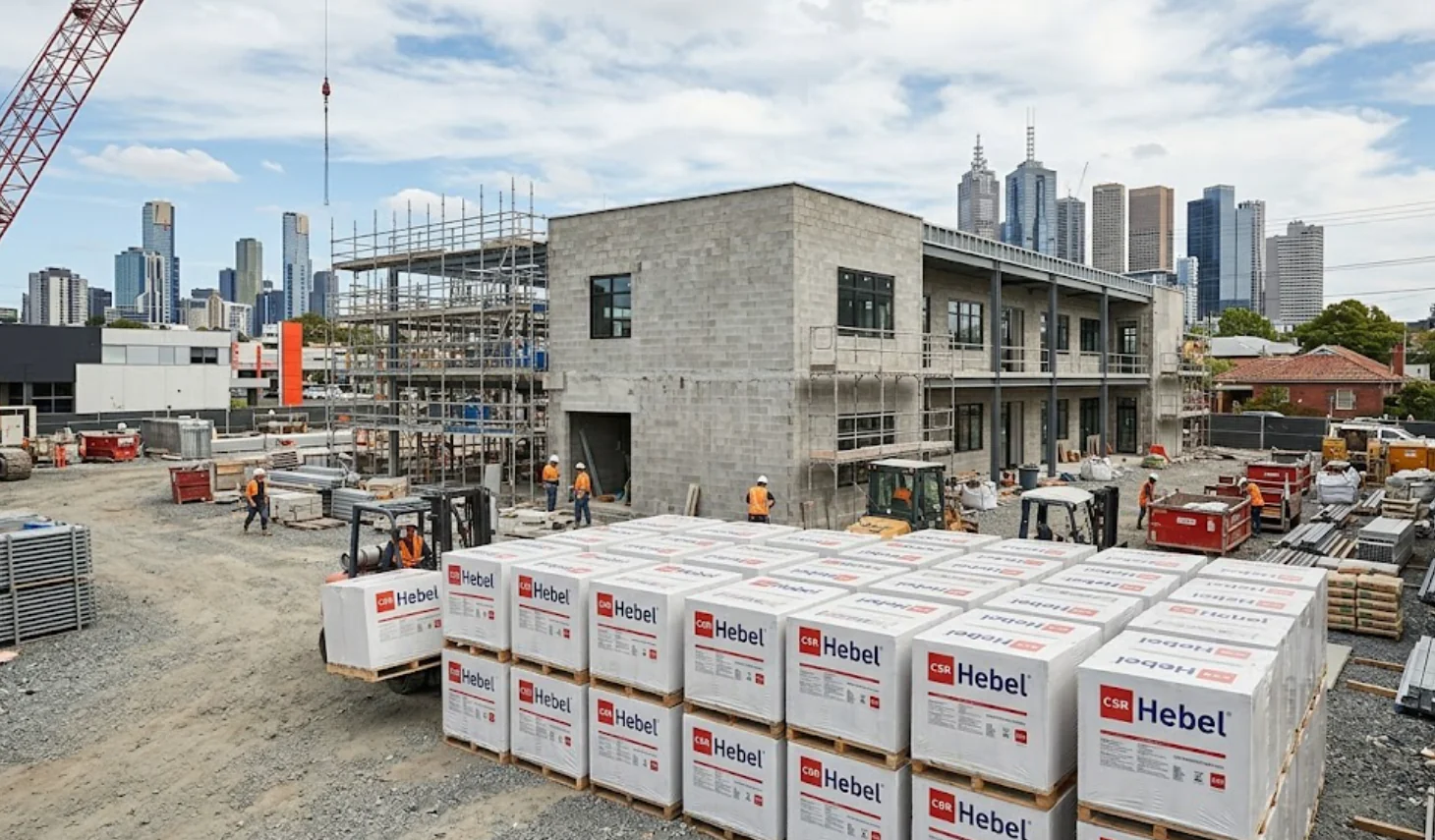
Across the commercial jobs worked on in Melbourne's south east, the priorities tend to fall into four consistent areas. These aren't ranked — most builders and developers care about all four at once.
Render scheduled to finish before the next trade arrives, with no surprises that push out the handover date.
Finishes and systems that meet the relevant building codes, fire ratings, and energy requirements without rework.
Identical finish quality across every unit, wall, or facade section, regardless of how large the project is.
A finish that holds up under commercial use and weather exposure without early cracking or maintenance headaches.
Each system suits a different brief. Here's a straightforward comparison of what's commonly used on commercial projects across Melbourne's south eastern suburbs.
| System | Best Suited To | Fire Resistance | Insulation | Typical Use Case |
|---|---|---|---|---|
| Hebel Panels | Multi-unit, repeat layouts | High | Good | Townhouses, apartment blocks |
| Stone Veneer | Low-rise commercial | High | High | Retail fronts, offices |
| Loxo Panel Cladding | Long-warranty projects | High | Very High | Developments, larger builds |
| Acrylic Render | Modern, flexible finishes | Moderate | Moderate | Offices, mixed-use buildings |
Swipe sideways to see the full table on smaller screens.
Residential rendering rarely involves a compliance officer checking the work. Commercial rendering often does. Fire ratings, energy efficiency requirements, and council sign-off all sit in the background of most commercial projects, and the rendering system chosen needs to satisfy whatever's been specified in the building plans.
This is one of the bigger differences between the two types of work. On a home, the render mostly needs to look right and last. On a commercial build, it also needs to be documented, certified, and consistent with what was approved on paper before the job even started. Concrete finishing work on commercial sites faces the same scrutiny — spec compliance isn't optional when there's a certifier involved.
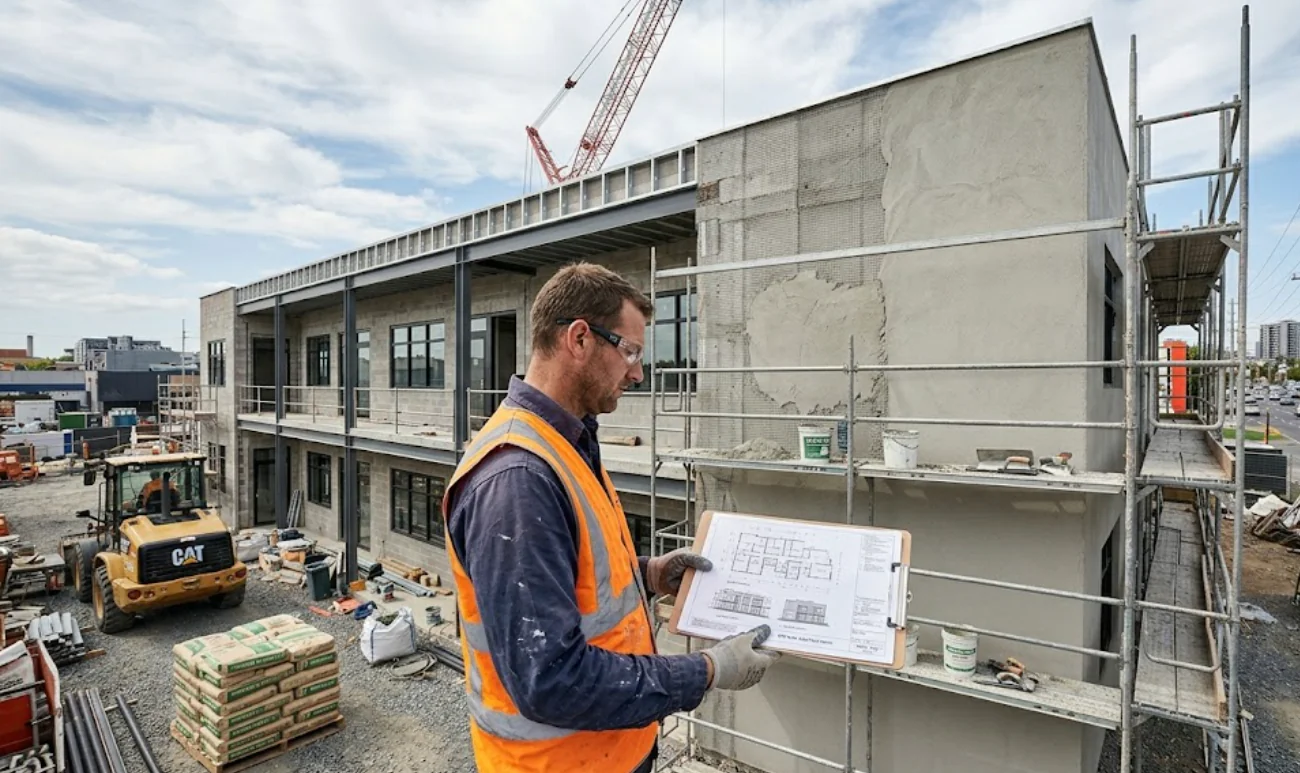
The order of operations isn't dramatically different from residential work, but the planning stage carries more weight given the deadlines and compliance involved.
Builders and developers comparing quotes for a commercial rendering job in Melbourne should be looking past price alone. These are the points worth confirming before signing off on a contractor.
Commercial rendering in Melbourne is a different conversation to rendering a home, even when some of the materials overlap. The deadlines are tighter, the compliance requirements are real, and consistency across a larger scope matters in a way it simply doesn't on a single residential facade.
If you're a builder or developer planning a project in Melbourne's south eastern suburbs, Best Rendering Group works directly with commercial teams to fit rendering into the broader build schedule — not around it. Get in touch to talk through your next project.