
Choosing the right render colour is one of the most important decisions you will make when renovating or building a home. It affects your home’s kerb appeal, resale value and how well it fits within its surroundings. With so many render colours and finishes available, it can be hard to know where to start.
In this guide, we break down the most popular render colours for modern Australian homes in 2026, along with tips for choosing a shade that will suit your home’s style and stand the test of time. If you’re ready to get started, our team offers complete rendering and plastering services across Melbourne’s south-eastern suburbs.
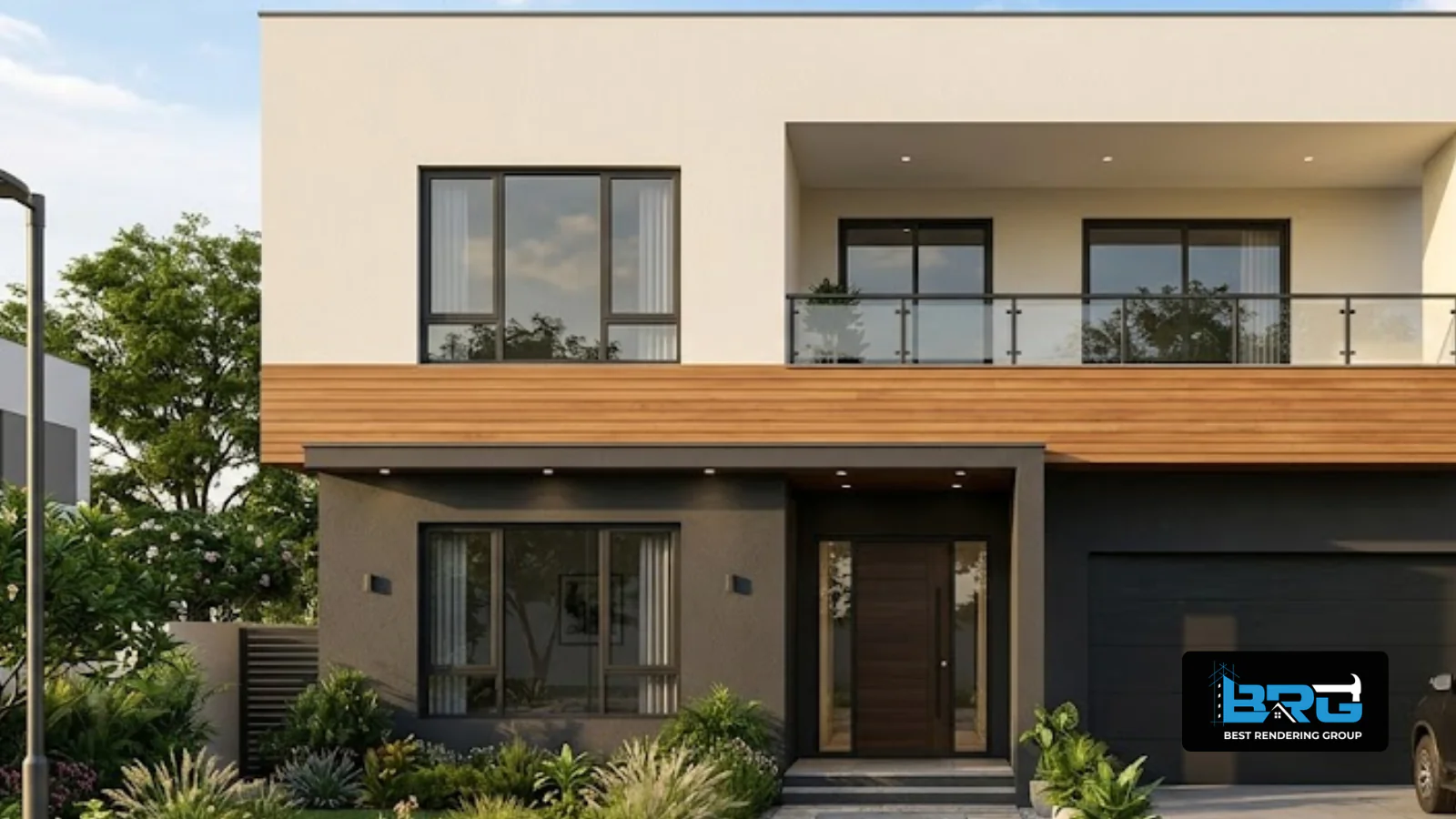
Render is not just a protective coating for your walls; it is also one of the most prominent visual elements of your home’s exterior. The colour you choose will influence:
To see how different colour choices come together in a finished home, browse our rendering and plastering project gallery.
Warm white remains one of the most popular render colours across Australia – and for good reason. It brightens a home’s facade, pairs beautifully with timber and black accents, and suits almost any architectural style, from Hamptons-inspired homes to minimalist new builds. Popular shades include soft ivory, Dover White and natural white tones that avoid looking too stark or clinical.
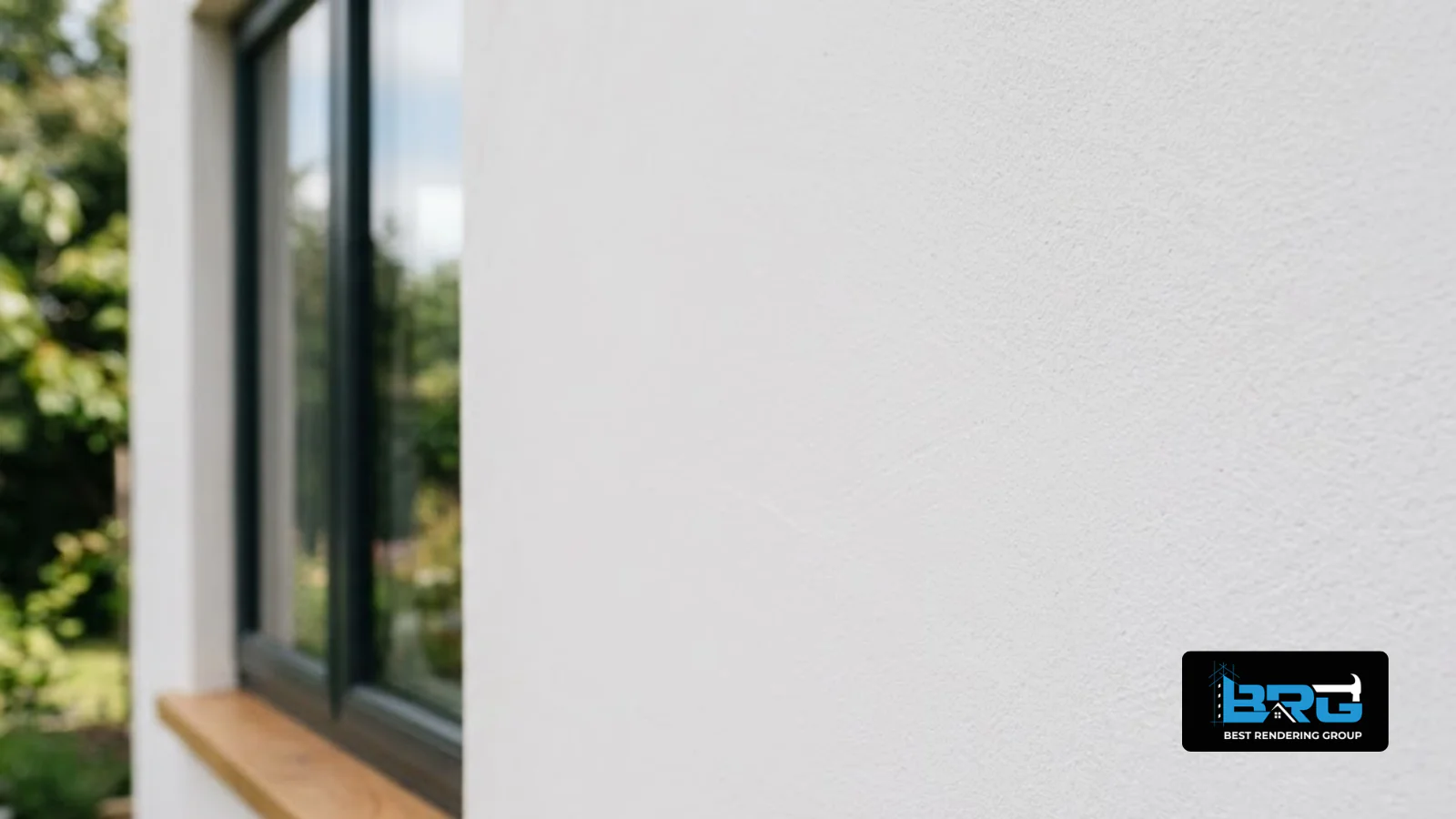
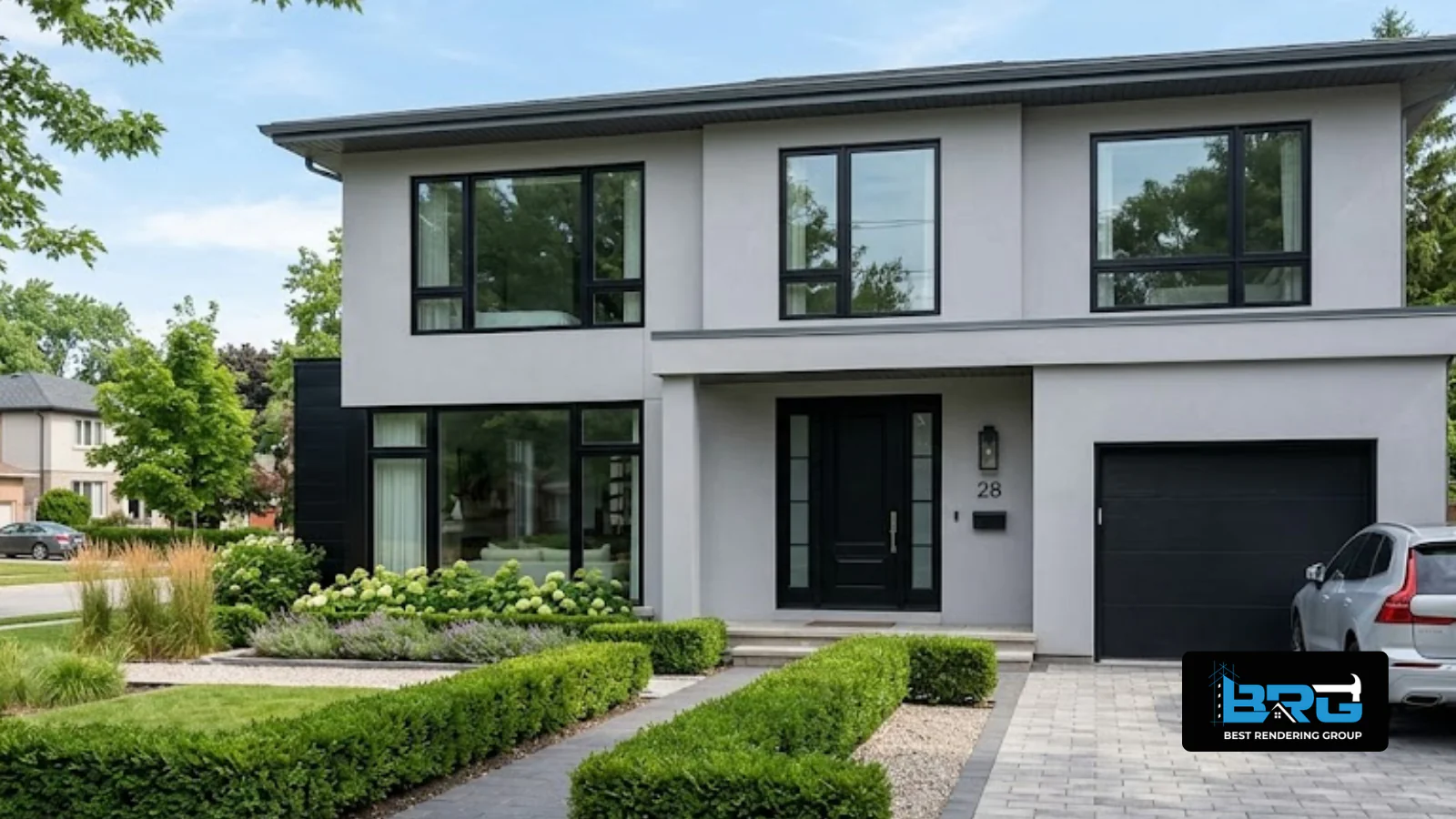
Grey and ‘greige’ (a blend of grey and beige) continue to be popular in 2026. These tones offer a sophisticated, contemporary look without feeling cold, and they hide minor surface marks better than pure white finishes. Soft grey renders work particularly well on homes with black window frames, dark roofing and structured landscaping.
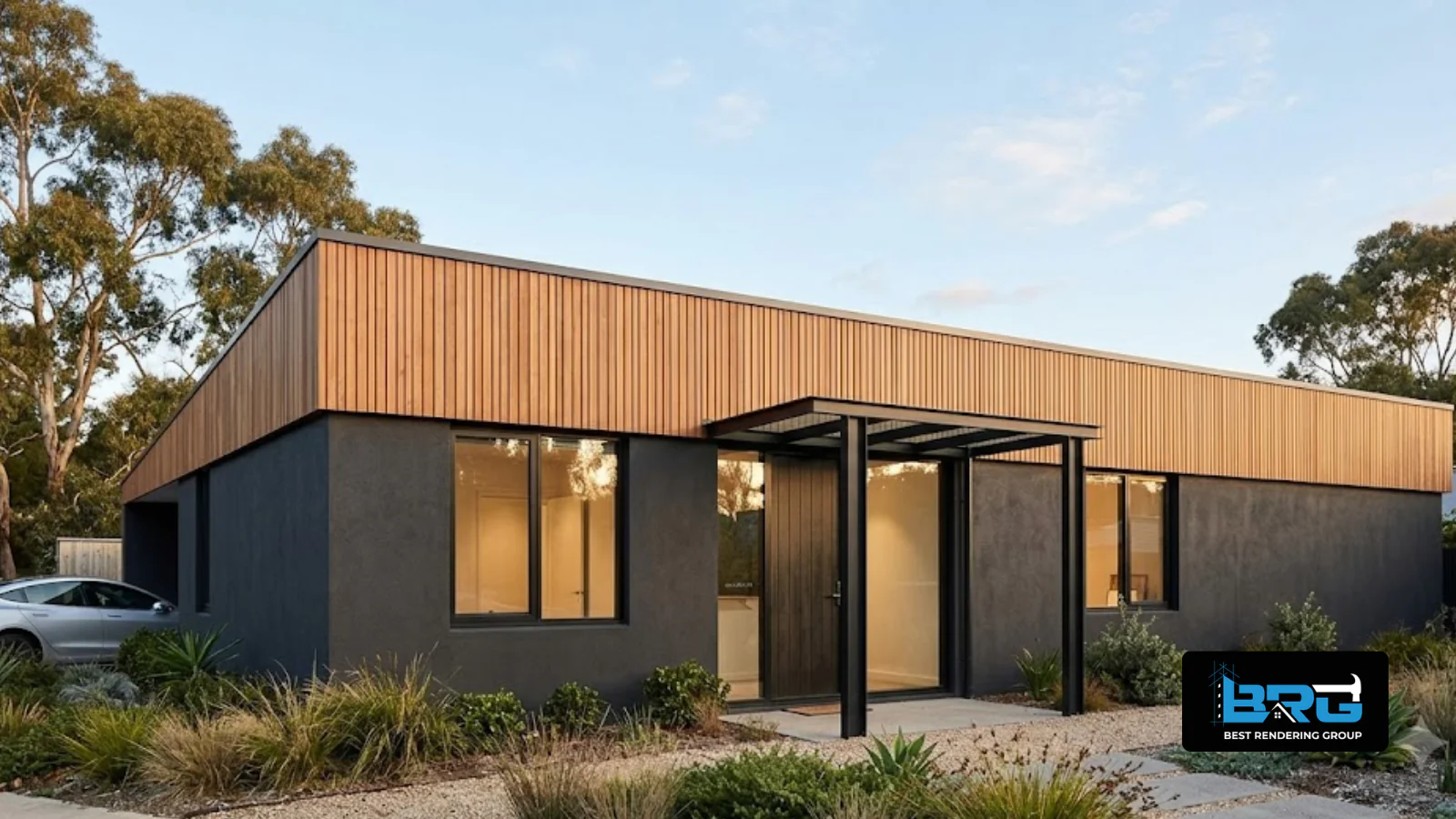
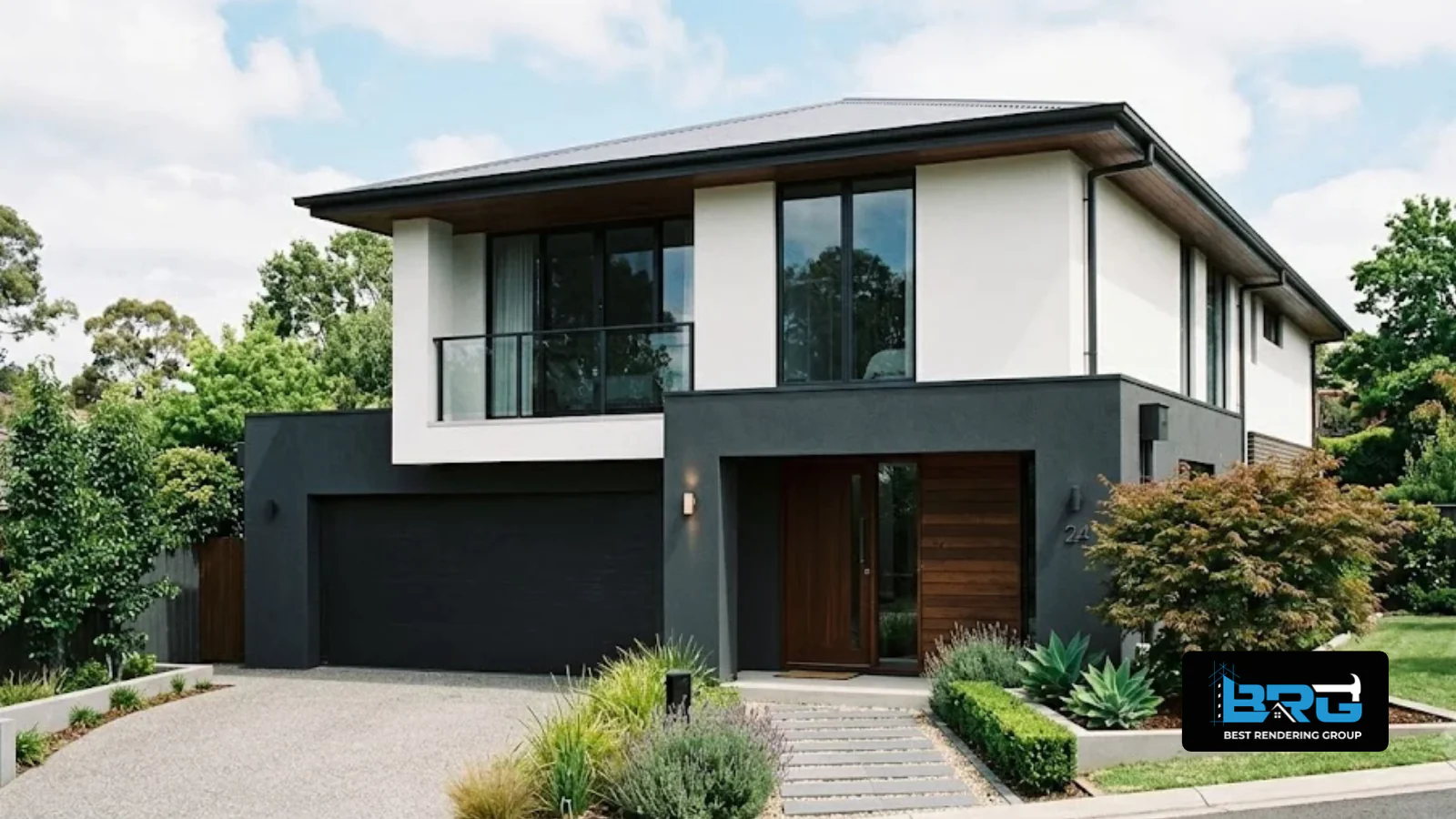
For homeowners wanting to make a bold architectural statement, charcoal and near-black renders have become increasingly popular, particularly on single-storey and split-level modern homes. As darker renders absorb more heat, they are often used as accents on lower levels, entryways or feature walls rather than across an entire façade in hotter regions.
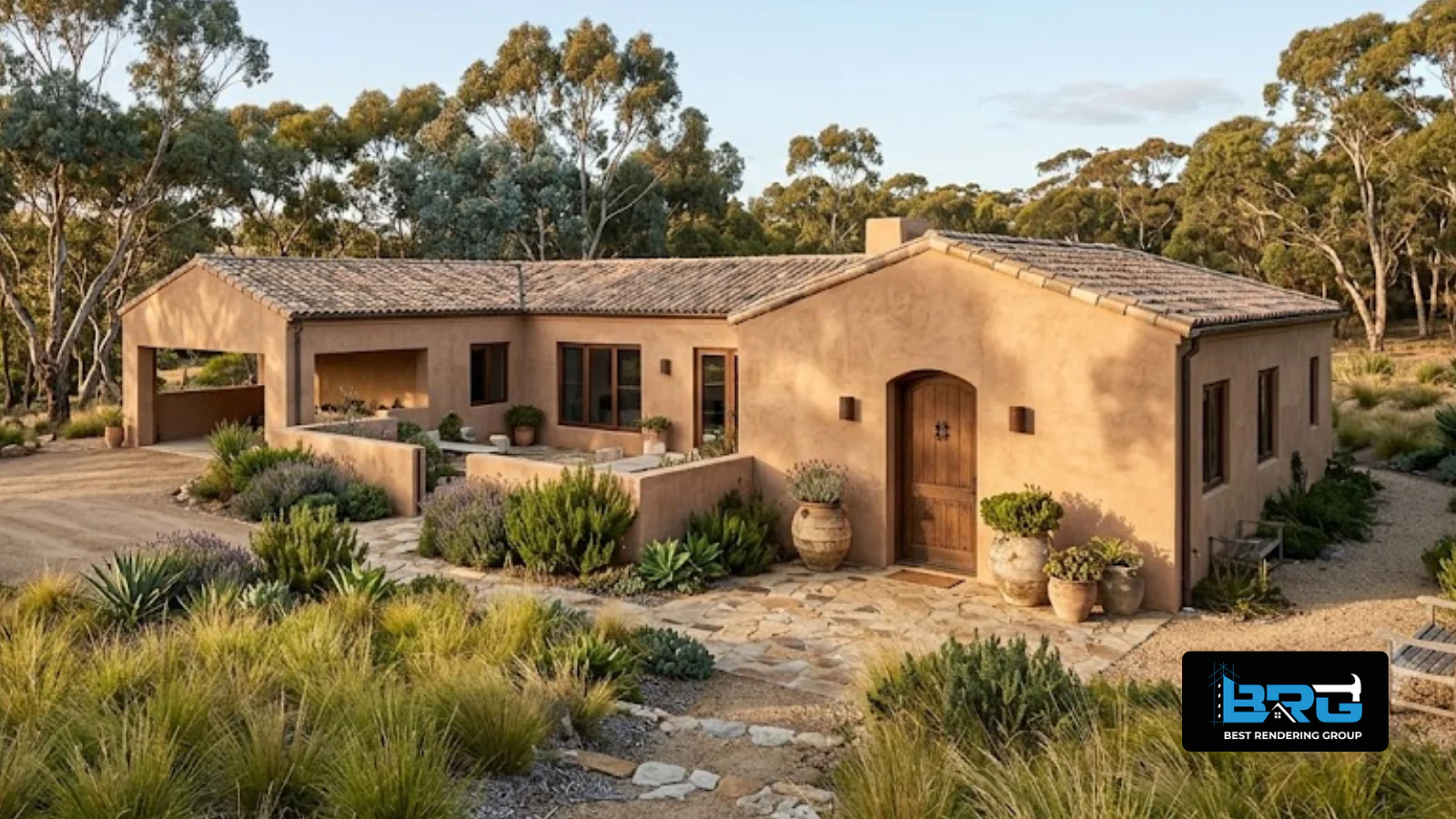
Sand, clay and soft terracotta renders bring warmth and a Mediterranean or coastal feel to a home. These tones suit homes surrounded by native gardens and work particularly well in regional and coastal areas of Australia, where they blend naturally with the landscape rather than contrasting with it.
Muted, dusty greens have moved from interior colour palettes to exterior walls and are proving popular among homeowners wanting something distinctive without being overpowering. Sage render pairs beautifully with timber, natural stone and brass fixtures.
Rather than committing to a single shade, many homeowners are opting for two-tone render schemes, pairing a lighter upper storey with a darker base, or combining render with brick, stone or cladding for visual contrast and depth.
Keep in mind that your chosen colour may also look slightly different depending on the render system used, whether it is traditional cement render, an acrylic finish over brick or a system applied over Hebel® panels or foam cladding. Our team can advise you on the best substrate and colour combination for your build.
Consider your home’s architectural style. A Hamptons-style home suits soft whites and creams, while a minimalist or industrial build often calls for grey, charcoal or black.
Think about Australia’s climate. In hotter regions, very dark colours across an entire façade can increase internal heat load. Lighter and mid-tone renders tend to perform better in full-sun locations, while darker tones can still be used effectively as accents.
Consider your streetscape. A colour that clashes with neighbouring homes or the surrounding landscape can reduce your home’s appeal rather than enhance it. Walk around your neighbourhood and note which tones feel harmonious. We regularly help homeowners choose colours suited to their local streetscape, from Berwick and Frankston through to Narre Warren and Pakenham.
Match your render colour with your roof, trims and other exterior finishes. Your render colour should work with your existing or planned roof colour, window frames, gutters and fascias, rather than competing against them.
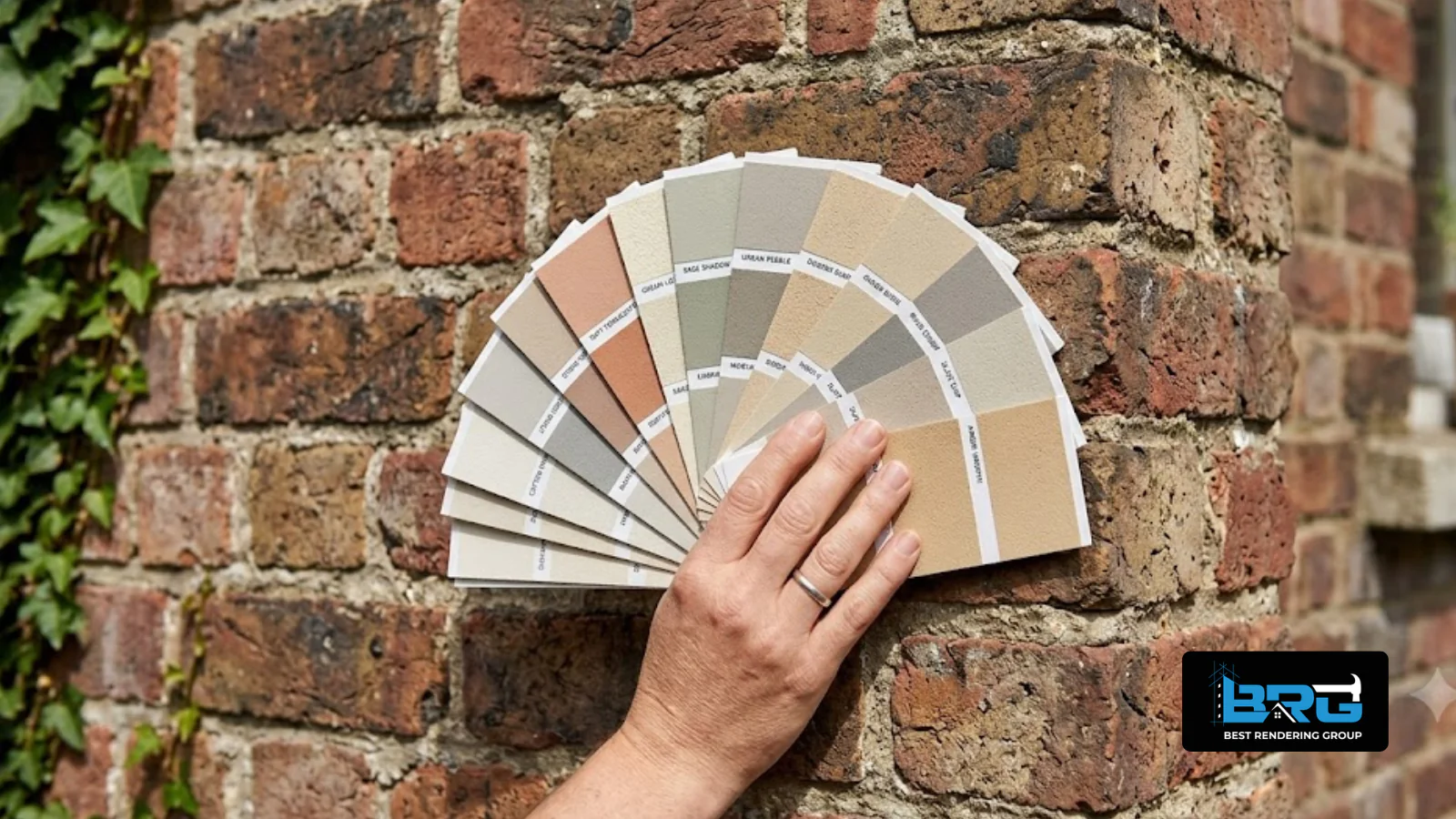
Test the colour before you commit. Always view sample render colours on your actual wall in both natural daylight and shade before finalising your choice. Colours can appear noticeably different once they are applied at full scale than they do on a small sample chip.
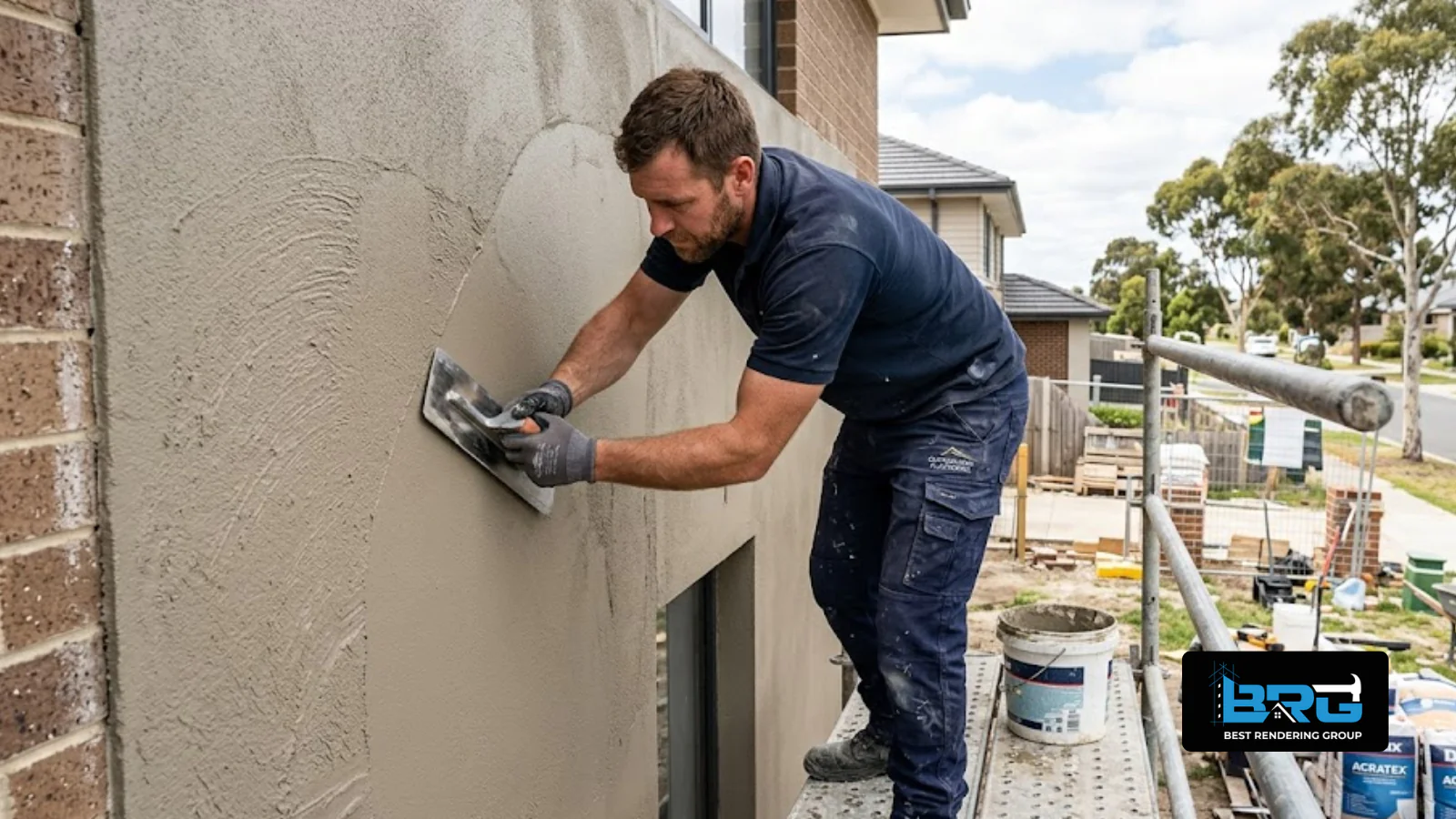
Colour is only part of the equation; the finish you choose also affects the final look:
Beyond the wall render itself, finishing touches such as decorative moulding around windows, entryways and cornices, as well as polished concrete finishes for paths and driveways, can help tie your entire colour scheme together.
At Best Rendering Group, we help homeowners select and apply the right render colour across Melbourne’s growth corridors, including Berwick, Cranbourne, Frankston, Narre Warren and Pakenham. Check our full list of service areas to see whether we cover your suburb.
Choosing the right render colour is easier with expert guidance. At Best Rendering Group, our experienced team can help you select a colour and finish that suit your home’s architecture, your local climate and your personal style, then deliver a high-quality, long-lasting result through our full range of rendering and plastering services.
Contact us today for a free consultation and personalised colour advice for your home.