
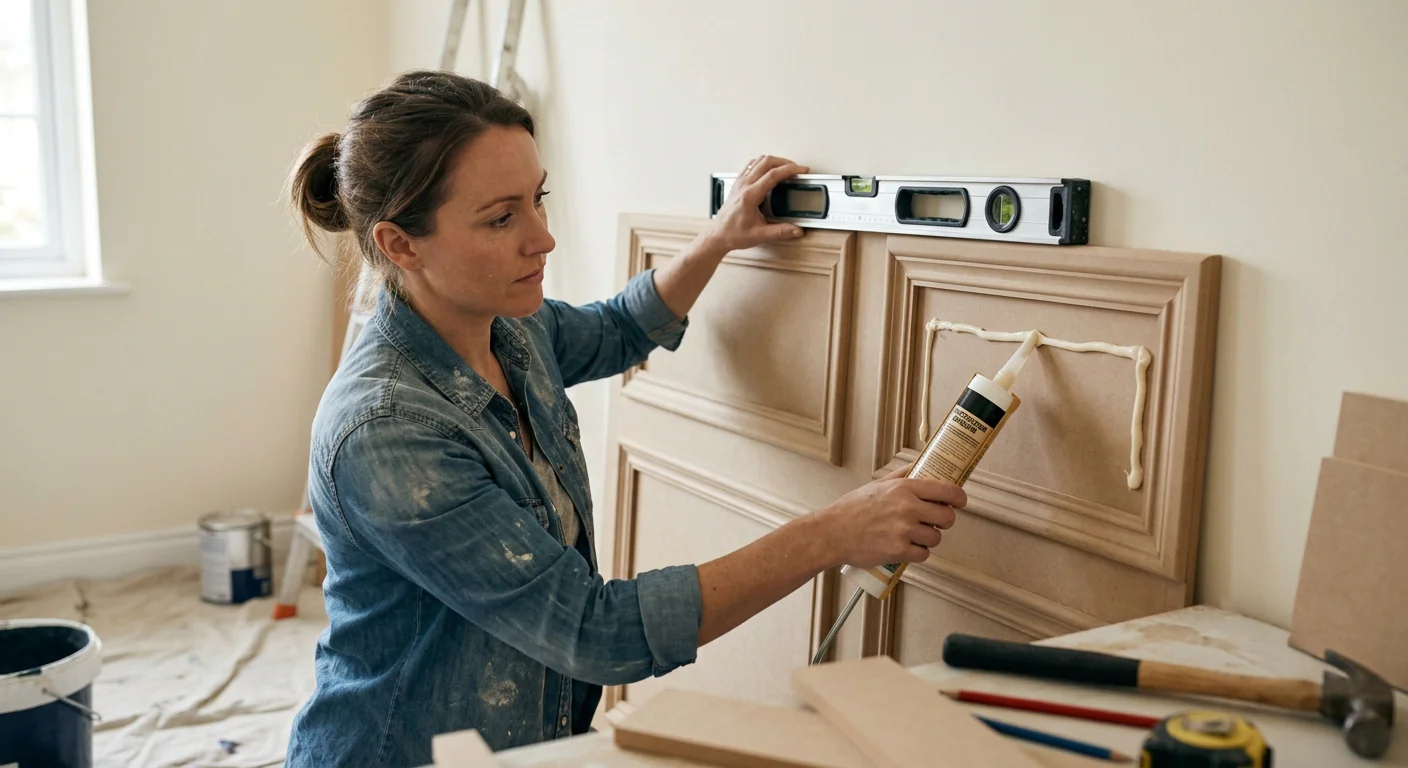
Wall mouldings are one of those details that either make a room feel finished or make it feel like something's missing, and most people can't quite put their finger on which one is happening until it's pointed out. If you've been searching around for wall mouldings, chances are you've landed on one of two starting points — either you're eyeing off a feature wall with panel moulding in it, or you've got plain, flat walls and you're trying to work out whether trim, cornices or panelling is the right call. Best Rendering Group fits interior and exterior mouldings across projects big and small, and the honest answer is: it depends on the wall, the room, and what you're trying to achieve.
There's also a fair bit of confusion out there between buying something off the shelf and having it properly installed, which is where a lot of DIY moulding jobs go sideways. A length of trim looks simple enough sitting in a hardware store aisle. Getting it to sit flush, mitred cleanly at every corner, and fixed so it doesn't pull away from the wall in a year is a different skill entirely — and it's usually the difference between a wall that looks considered and one that looks like something was glued on afterward.
These three terms get used almost interchangeably by homeowners, but they're actually doing different jobs on a wall, and knowing which one you're after saves a lot of back-and-forth with whoever quotes the job.
Wall trim moulding — sometimes written as wall trim molding — generally refers to the horizontal or vertical strips used to frame a section of wall, create a picture-rail effect, or define a wainscot line partway up a room. It's the most common starting point for anyone wanting to add architectural detail without a full renovation.
Decorative cornices sit at the junction between wall and ceiling, softening that hard right angle and adding a finished, traditional look. They range from simple, subtle profiles through to more elaborate period-style designs, and they're one of the fastest ways to lift a plain room without touching the walls themselves.
Moulding wall panels are the raised, geometric or grid-style panelling you'll see on feature walls, hallways and bedheads in a lot of newer builds. This is molding trim for walls used decoratively rather than functionally, usually built up from MDF or timber profiles fixed directly to the wall in a repeating pattern.
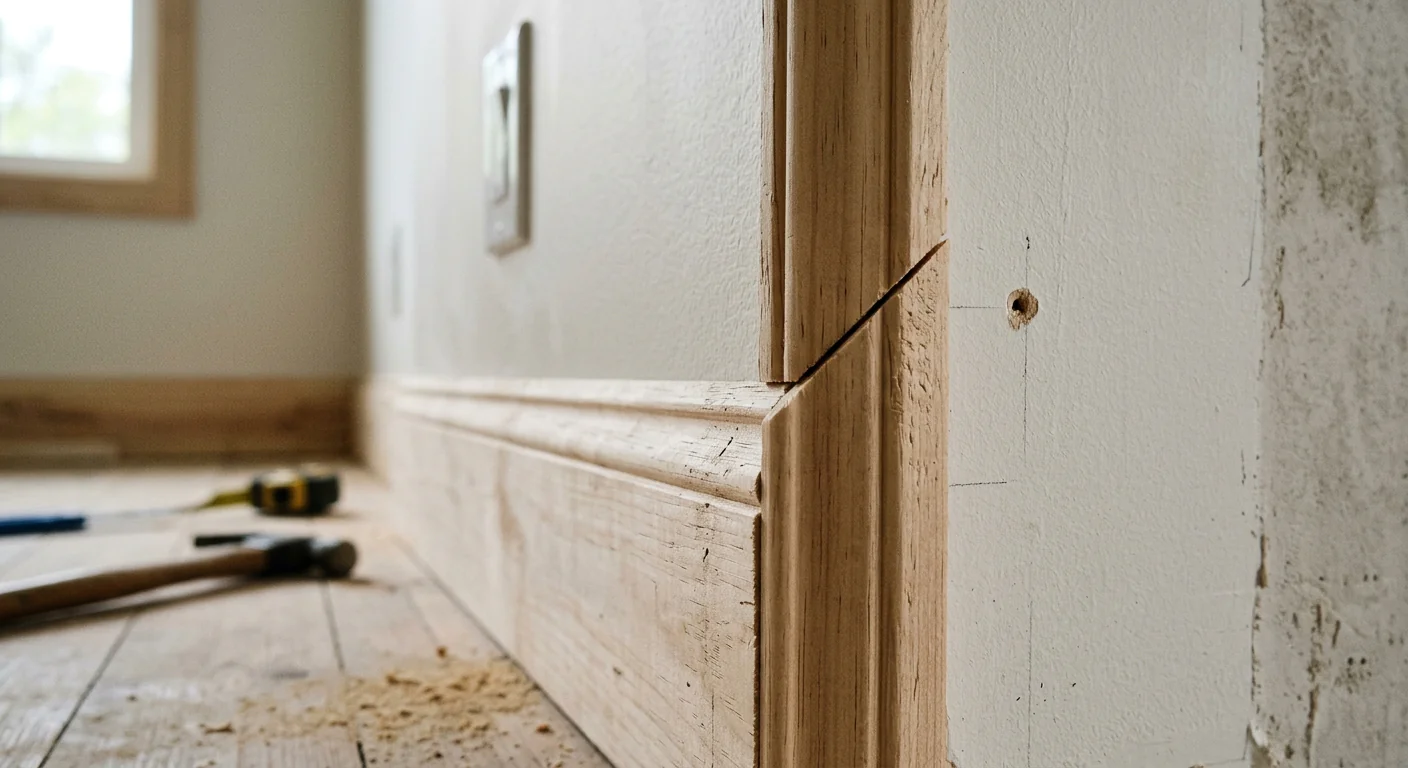
Interior moulding — skirting, architraves, cornices, feature panels — is usually timber, MDF or a lightweight polymer profile, chosen mostly for finish and paintability rather than weather resistance. It's not built to handle rain, UV or temperature swings, and it doesn't need to be, since it's living inside a climate-controlled room.
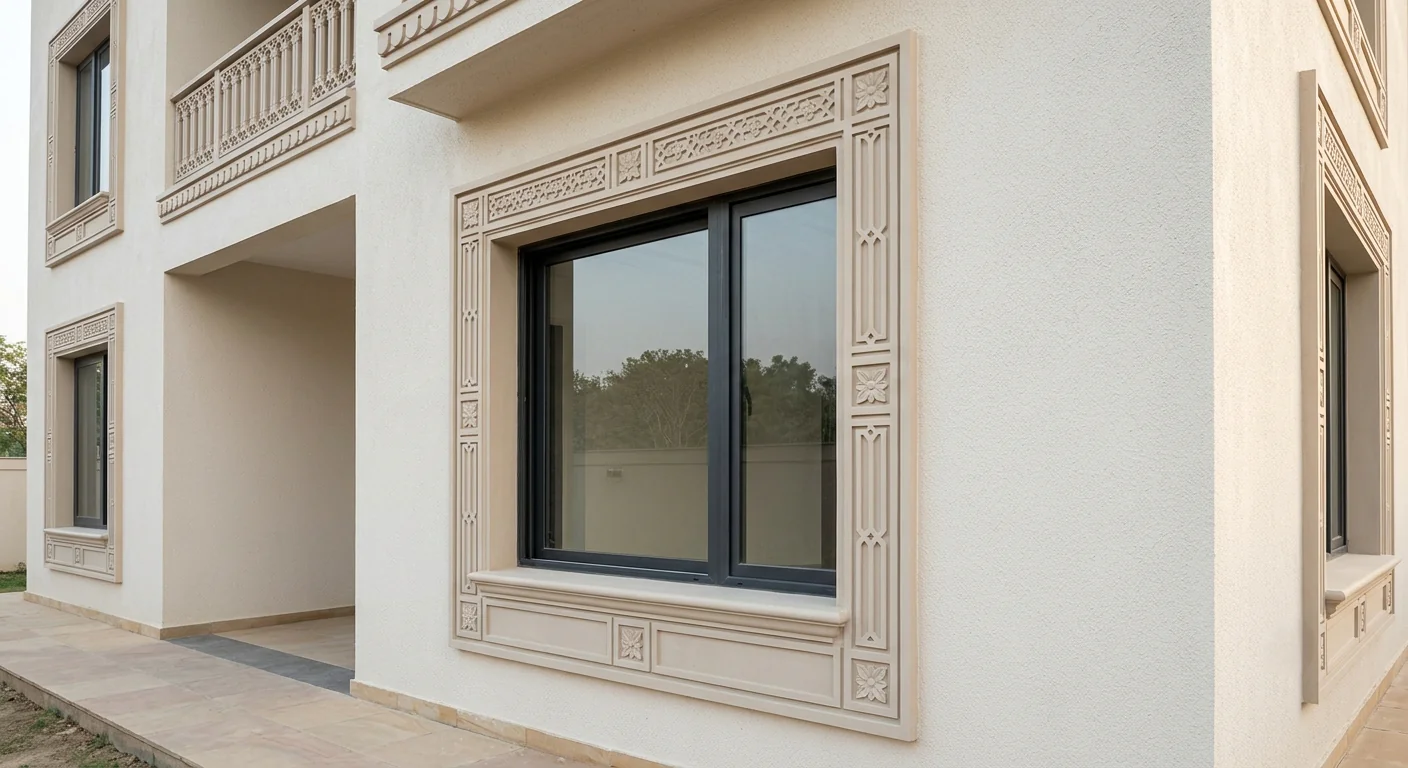
Decorative exterior mouldings are a completely different material conversation. Anything fixed to an outside wall in Melbourne's south east needs to cope with wet winters, harsh summer UV, and the kind of thermal movement that eventually pulls a poorly fixed trim away from the wall. That usually means a cement-based or polymer-modified moulding system rather than a timber profile, installed alongside or as part of a broader rendering job so the moulding and the wall finish move together rather than fighting each other. We see this play out consistently on exterior jobs from Berwick through to Frankston — a lightweight interior-grade profile fixed outside almost always fails within a couple of seasons. For a full breakdown of our decorative and architectural moulding options, visit our moulding services page.
Every corner, return and run length needs to be measured against the actual wall, not the plan. Real walls are rarely perfectly square.
Corner joints should sit flush and tight with no visible gap. This is the single biggest tell between a professional finish and a DIY one.
Adhesive, screws or a combination of both, chosen based on the wall substrate and moulding weight, not just whatever's on hand.
Every seam and edge against the wall needs to be properly filled and caulked before painting, or shrinkage will show as a hairline gap.
Pricing depends heavily on the type of moulding, the wall length being covered, and whether it's a straightforward trim run or a more detailed panel design. These figures are a general guide only.
Can I just buy decorative mouldings from Bunnings and install them myself?+
You can, and plenty of people do for small, simple trim runs. Off-the-shelf decorative mouldings from a hardware store work fine for straightforward jobs on a single flat wall. Where it gets harder is anything involving multiple mitred corners, uneven walls, or a full panel design, since a slightly off mitre or a gap that opens up after a season of humidity change is very visible once it's painted. For feature walls and anything with more than a couple of joins, a professional install tends to hold up better and simply looks tighter.
What's the difference between interior moulding and exterior moulding materials?+
Interior moulding is typically timber, MDF or a lightweight polymer profile, chosen for finish and paintability since it never has to deal with weather. Decorative exterior mouldings need to handle rain, UV and thermal movement, so they're generally cement-based or polymer-modified systems designed to move with the wall's render finish rather than crack or pull away over time.
How much does decorative moulding cost per linear metre?+
Standard wall trim and picture-rail style moulding generally runs from around $25 to $45 per linear metre supplied and installed, while more detailed cornice profiles or exterior systems can run higher depending on complexity. The stat-card breakdown further up this page covers the common categories, but the exact cost depends on wall length, corner count and profile choice.
Do moulding wall panels work in small rooms?+
Yes, often surprisingly well. A well-scaled panel design with a slimmer profile and appropriate spacing can actually make a small bedroom or hallway feel more considered rather than busier, provided the grid size is proportioned to the room rather than just copied from a much larger space. It's worth getting the layout right on paper before anything is cut.
Do mouldings need to be repainted or maintained over time?+
Interior mouldings generally only need repainting alongside the rest of the room, with an occasional check of caulked joints for shrinkage cracks. Exterior mouldings need more regular attention, since UV and moisture exposure can affect sealant and paint film faster than an equivalent interior job — a periodic check every few years keeps them looking sharp and catches any joint movement early.
Wall mouldings are a small-budget way to make a big difference to how a room or facade reads, but the gap between a good install and a mediocre one is almost entirely in the detail work most people never think to ask about — the mitres, the fixing method, the caulking that gets rushed at the end of a long day. A wall can look fine in daylight and still be uneven enough to bother you the moment the lights go on at night, and that's usually a fixing or mitre problem more than a design one.
Best Rendering Group fits interior and exterior mouldings across renovations, new builds and commercial fit-outs throughout Melbourne's south east, working directly with homeowners, builders and interior designers on everything from a single picture-rail run to a full feature-wall panel design. With more than a decade of hands-on trade experience and fully insured teams on every job — details worth confirming directly before booking — getting the mitre right the first time matters more than most people expect until they've seen the alternative.